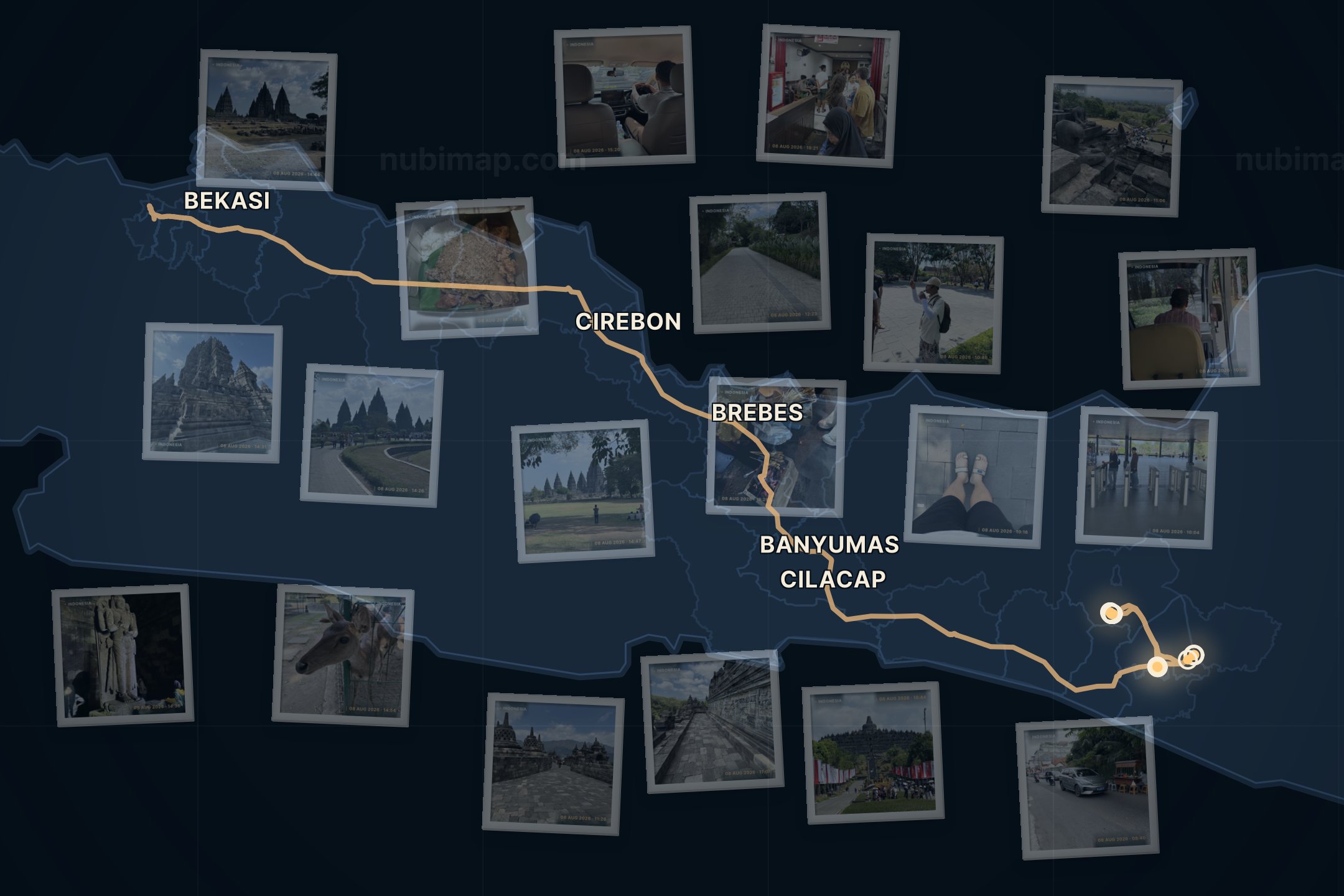
Crossing Temples of Thousand-Year Stone to Taste Yogyakarta's Night
My style of travel is to pick a city, board a plane without a plan, and then find accommodation. I usually take a light walk around the lodging on the first day, and while lying in bed at night, search for places worth visiting the next day. However, this trip to Yogyakarta, Indonesia, kept me moving continuously from morning till night, making any talk of having "no plans" sound absurd. This is the record of a long day spent exploring colossal stone temples that have withstood hundreds or even thousands of years, and seeking out local dishes overflowing with regional character.
The Magnificent World's Largest Buddhist Monument, Borobudur Temple
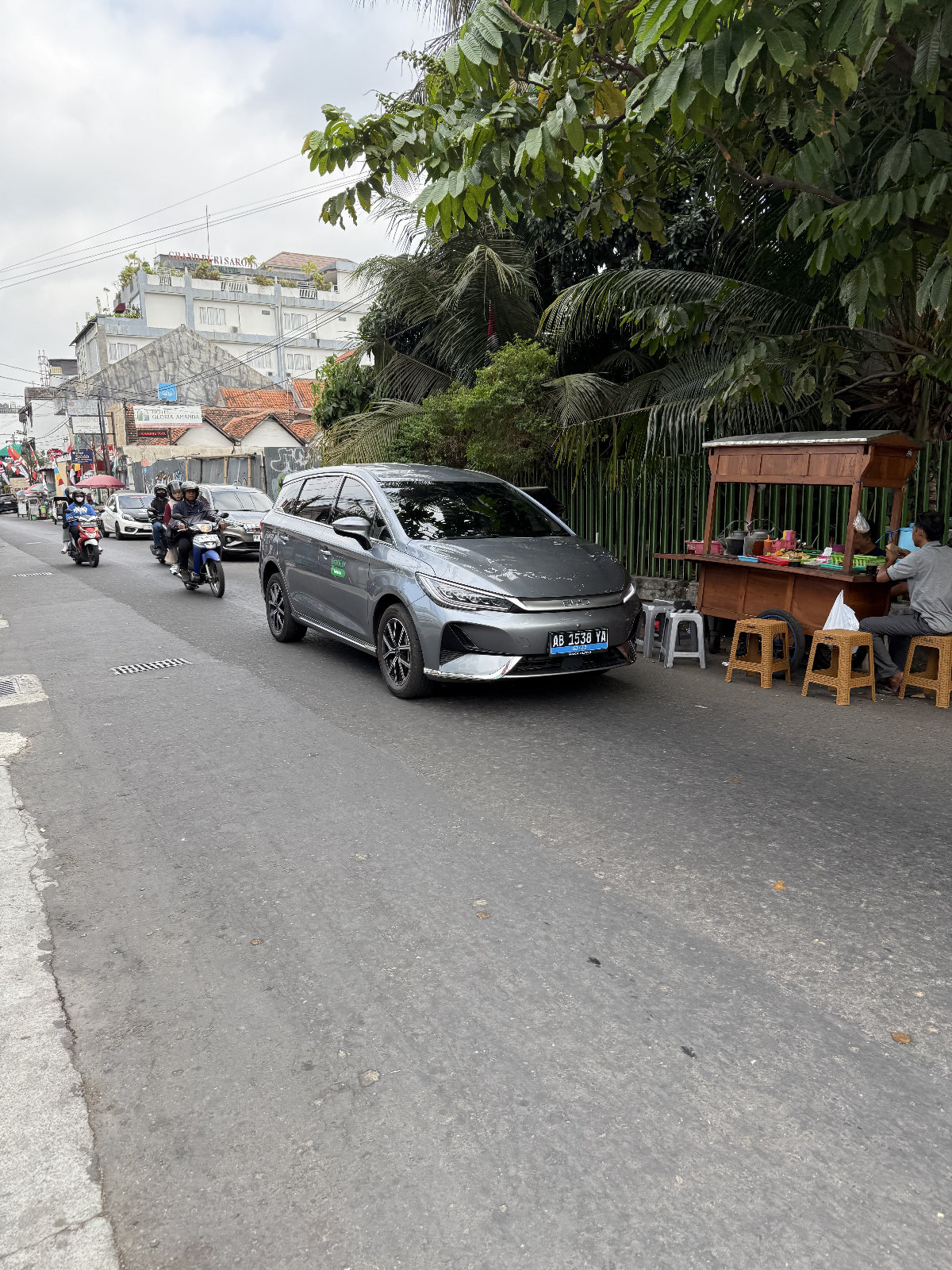
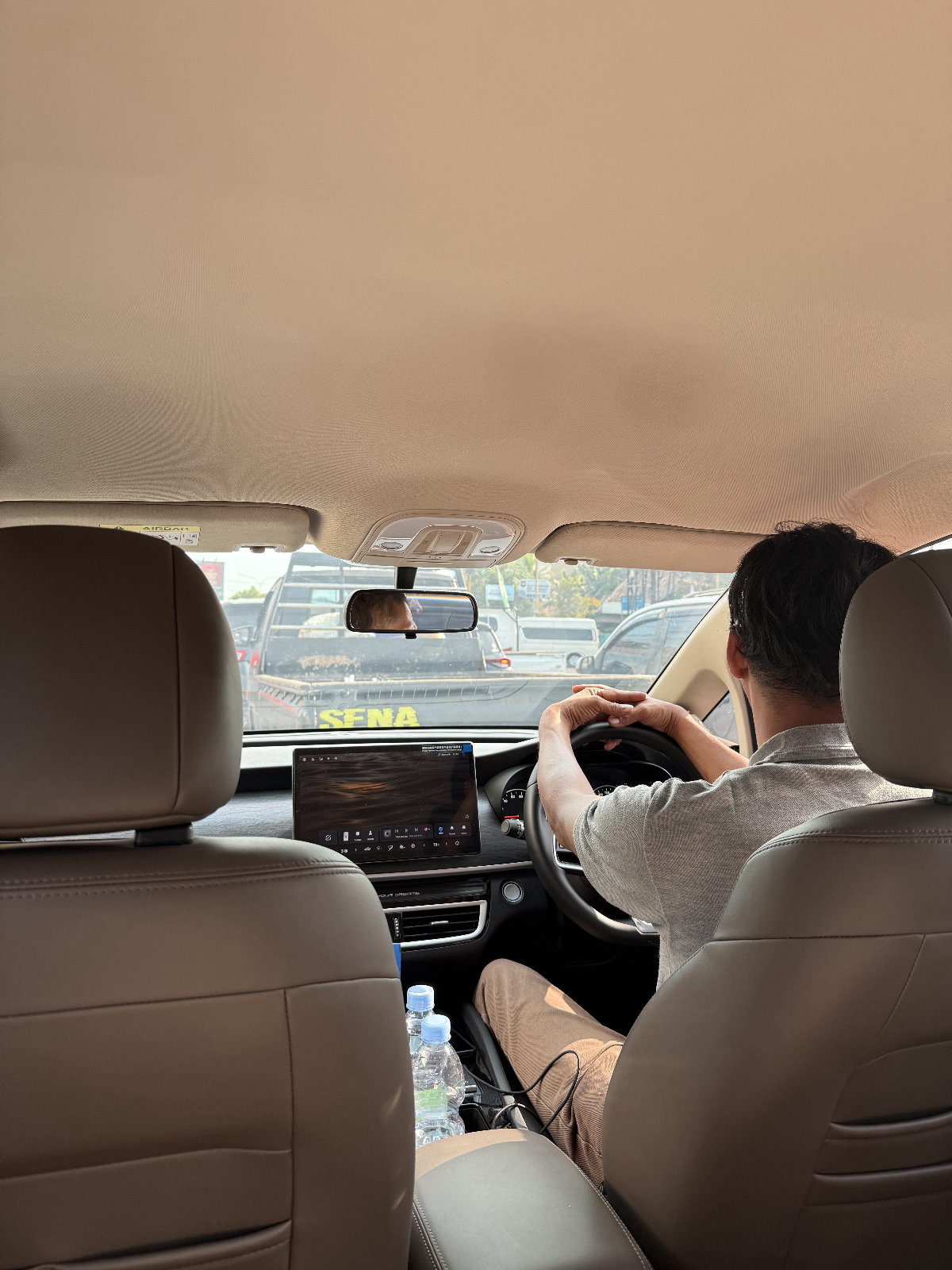
At 8:40 AM, since the distance to travel today was quite far, I decided to treat myself to a little luxury by calling a Grab Premium. The dispatched car was a clean, grey BYD electric vehicle. Perhaps because it was a new model, the interior was extremely comfortable and quiet. We drove for about an hour and a half, cutting through the congested streets of downtown Yogyakarta.
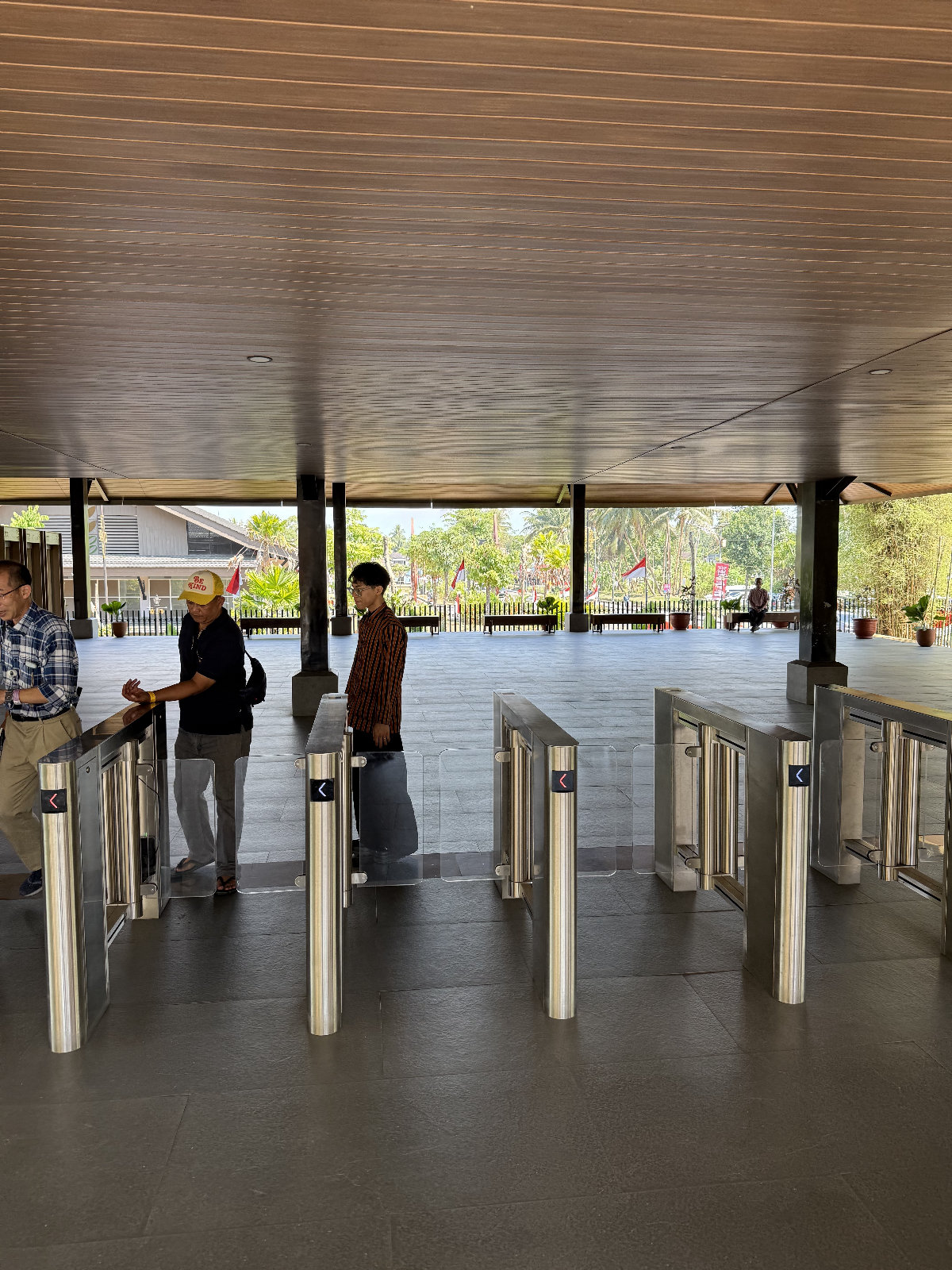
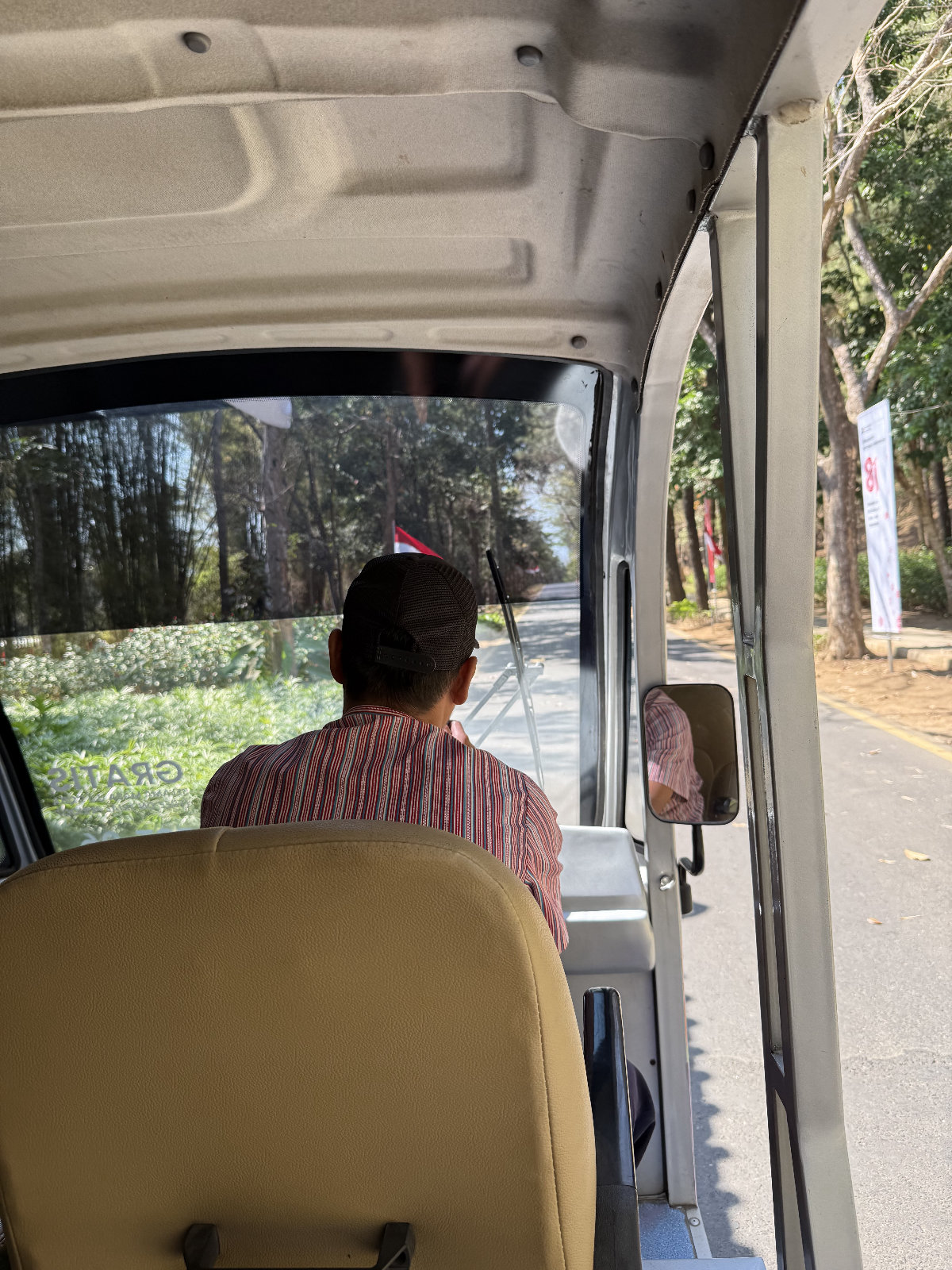
The place we finally reached was Borobudur Temple, located in the Magelang region. To protect the cultural heritage, Borobudur limits the number of visitors allowed on the upper levels, so I had pre-purchased a ticket online the day before. Thanks to preparing the restricted-entry ticket in advance, I was able to exchange it for a physical ticket right at the site and pass through the ticket gate. After entering, I boarded an electric cart to travel comfortably across the vast grounds.
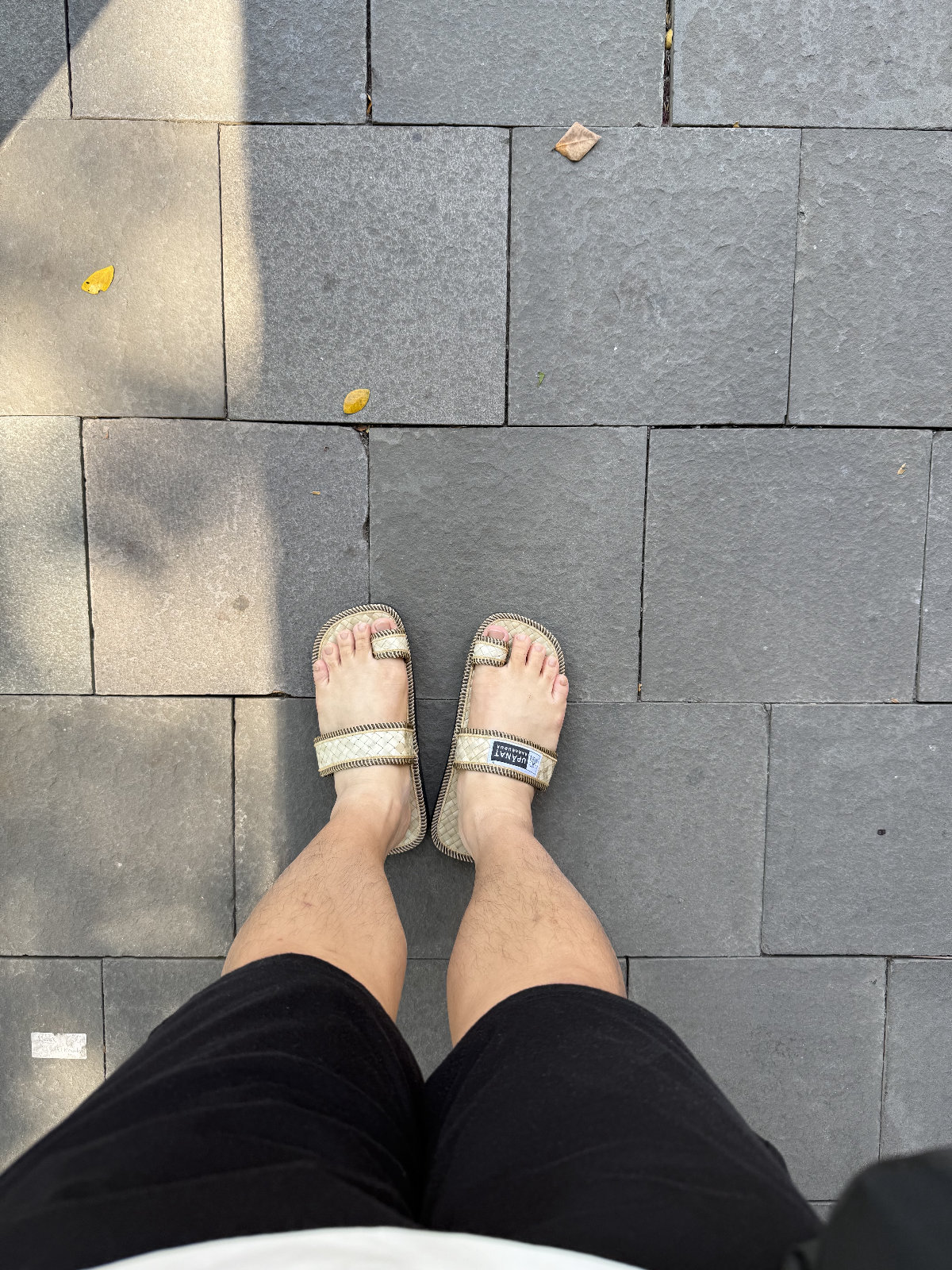
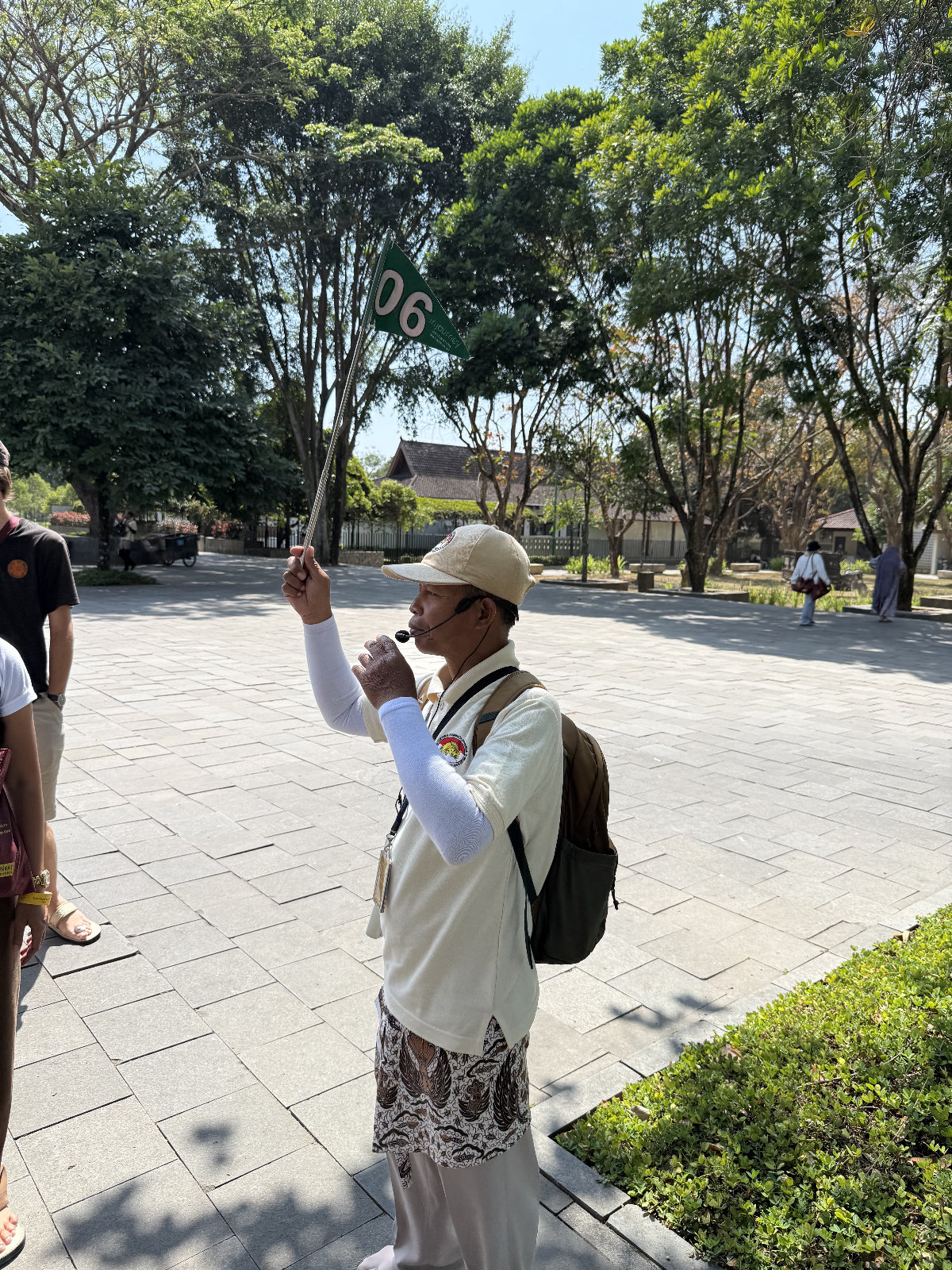
As we entered the temple approach, staff handed out 'Upanat', special woven straw sandals designed to protect the temple. It is a necessary measure to prevent damage to the rough stone steps and floors. Believing that I was reusing sandals worn by others, I felt uncomfortable the entire time I wore them, worrying that I might catch athlete's foot. However, upon completing the tour, I discovered that they were actually brand-new shoes to be kept as a souvenir, rather than returned. The tour of the entire temple grounds is conducted in a group format accompanied by a professional guide. The guide leads the group with a flag, explaining the history and structure of the ruins.
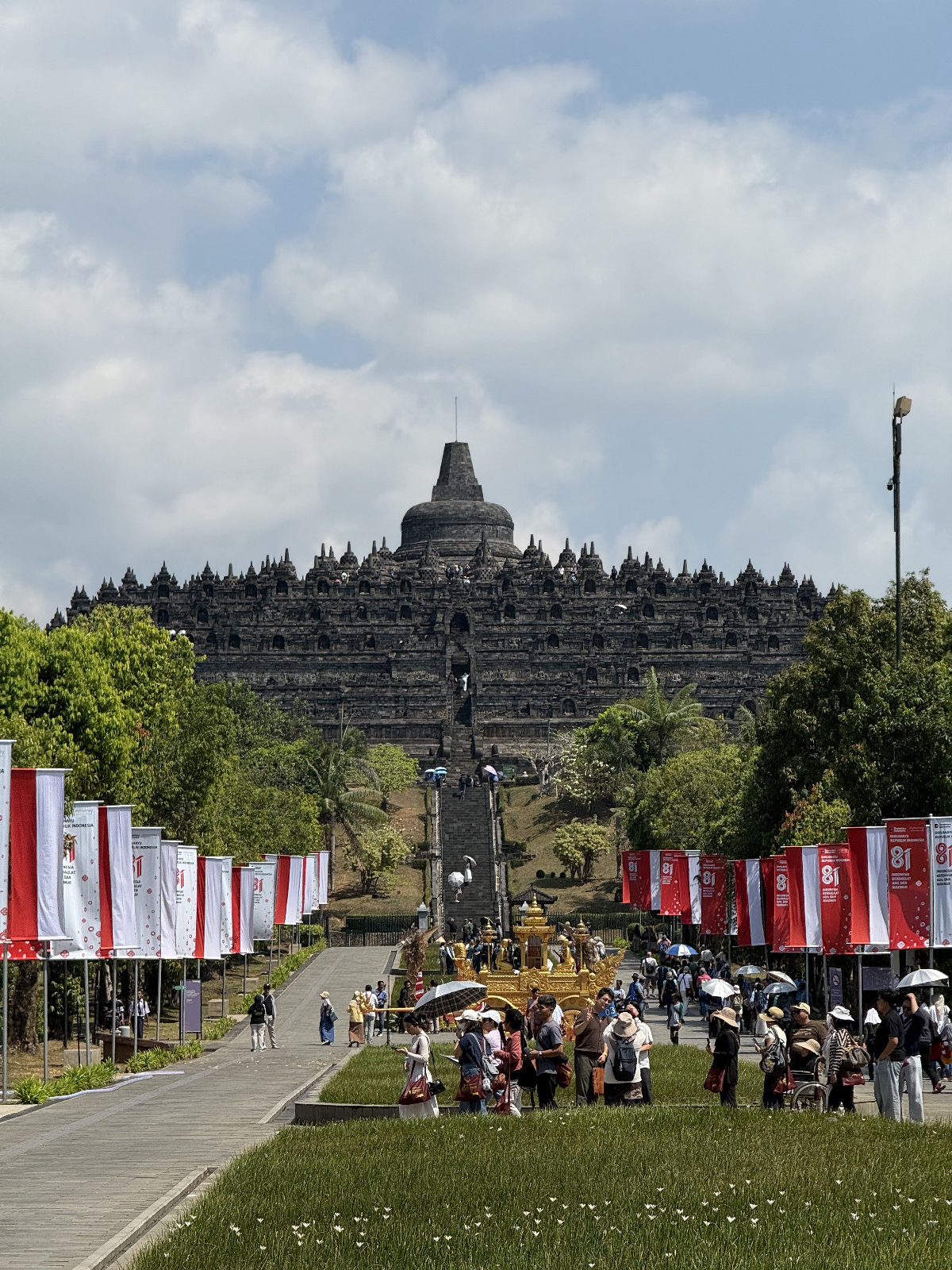
Appearing in the distance, Borobudur Temple boasts a truly overwhelming scale. Estimated to have been built during the Shailendra Dynasty in the 8th to 9th centuries, it is the world's largest single Buddhist monument. Over 2 million andesite blocks were stacked together without any cement-like adhesive, relying solely on locking the stones into one another. It takes the shape of a massive, three-dimensional Buddhist Great Mandala, representing a structural miracle that progressively implements the Buddhist worldview of the desire realm, form realm, and formless realm from the base to the top.
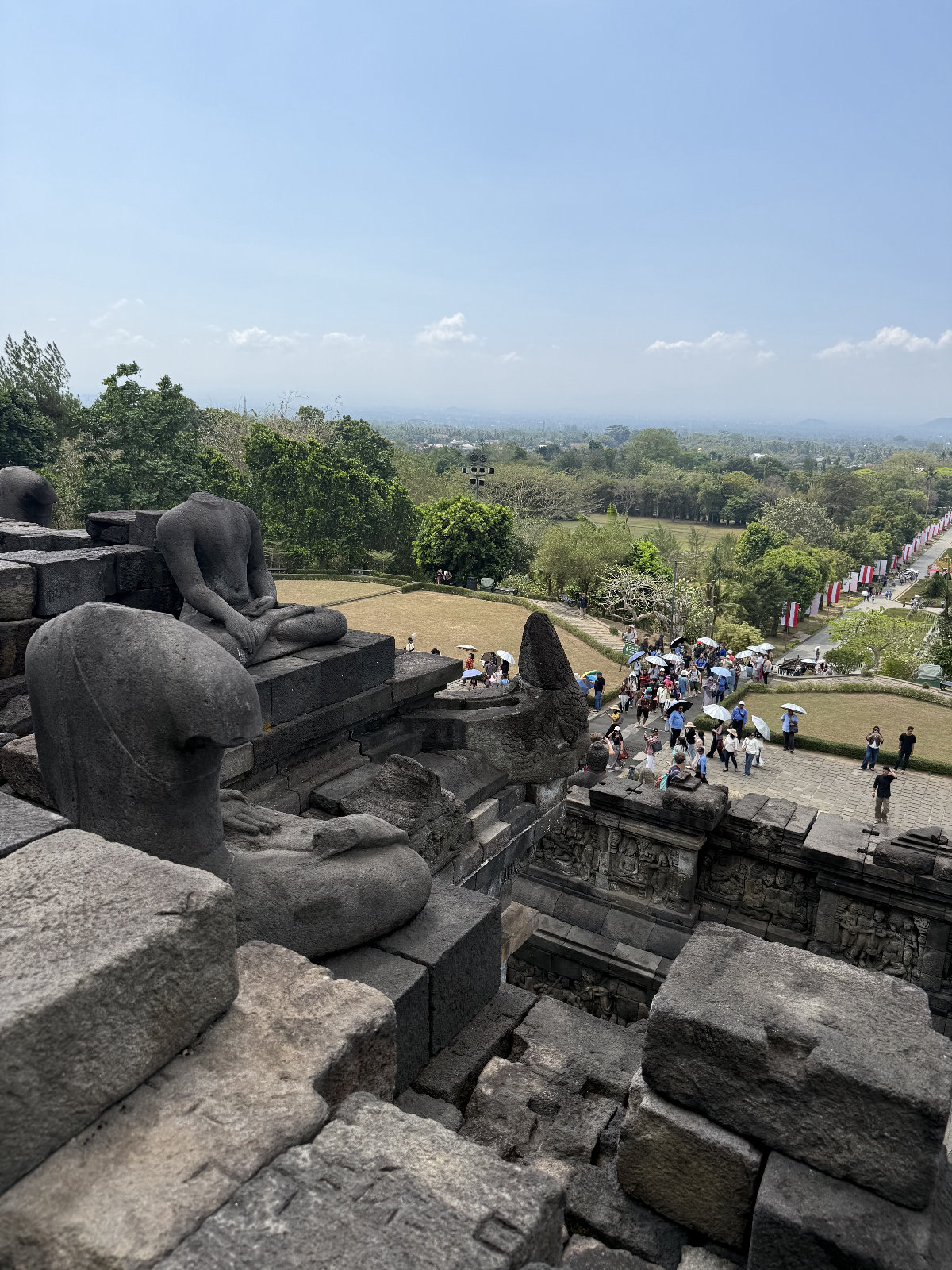
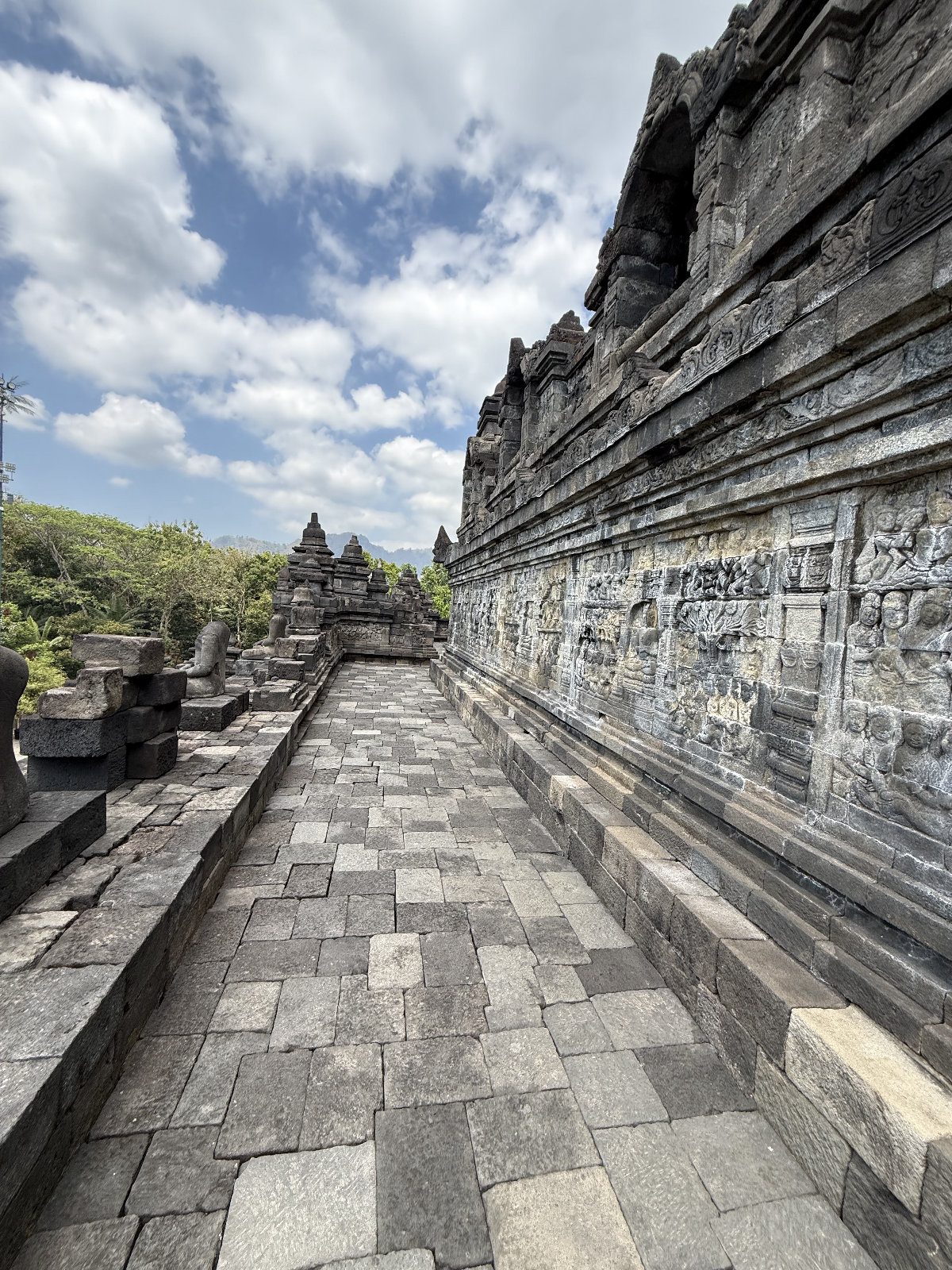
I examined the temple interior closely as we climbed the stairs. Numerous Buddha statues are enshrined along the temple base and corridors, but there was an unusually high number of headless statues. It is said that the neck area of the Buddha statues is structurally weak, causing the heads to break off during natural disasters like volcanic eruptions and earthquakes, or during historical looting by grave robbers. The delicate reliefs filling the walls exquisitely carve the life of Shakyamuni Buddha and the Jataka tales. Even without knowing the precise meanings, I gasped in awe at the devotion carved into every single stone by people thousands of years ago.
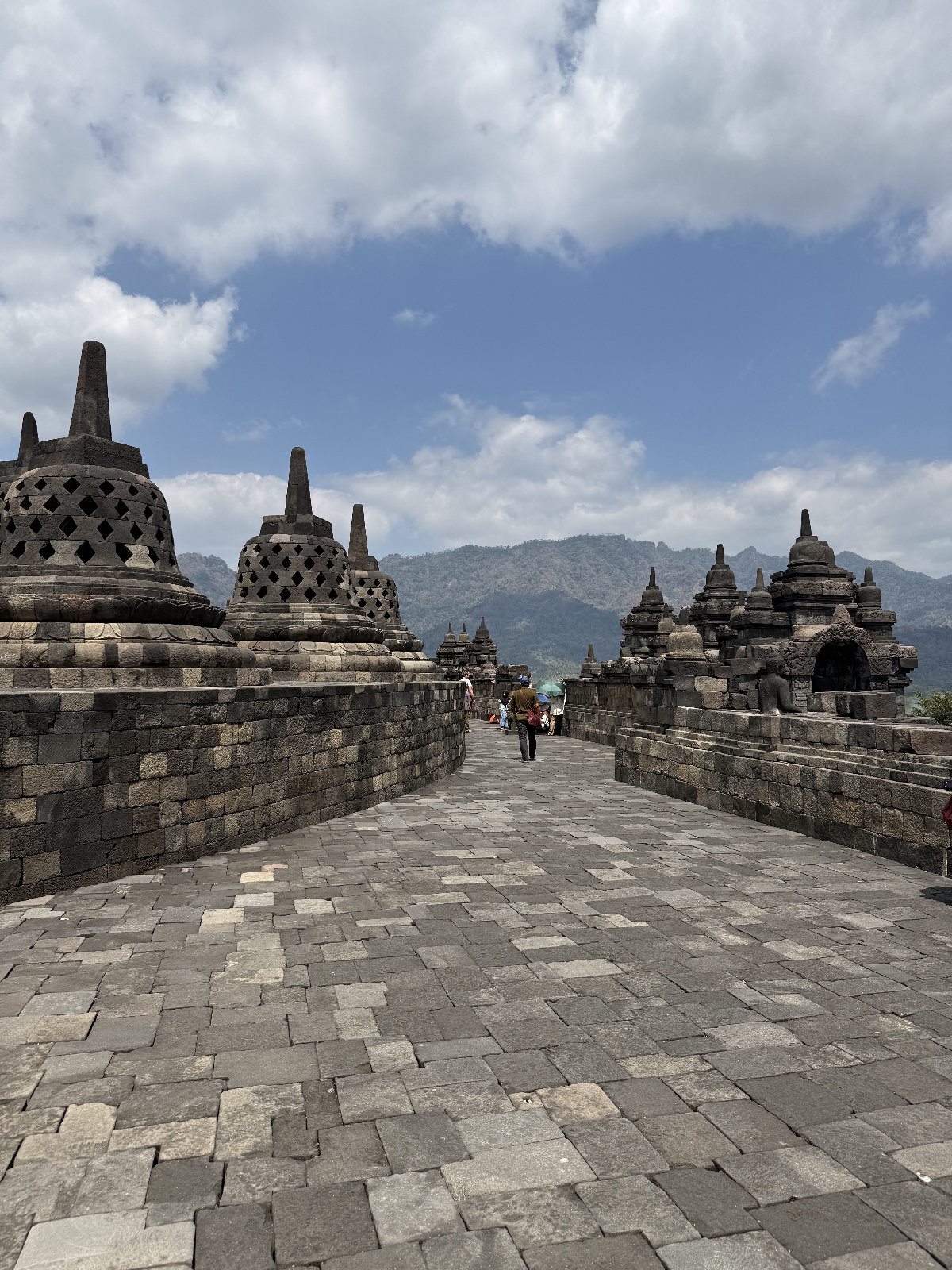
At last, we reached the uppermost level of the temple. This is a circular terrace symbolizing the formless realm (Arupadhatu)—the world of enlightenment—where bell-shaped, perforated stupas are arranged in a regular pattern. Inside each stupa, a meditating Buddha statue is enshrined. The harmony of the surrounding mountain scenery and the bell-shaped stupas viewed from the summit, combined with a cool breeze, offered a deep sense of tranquility.
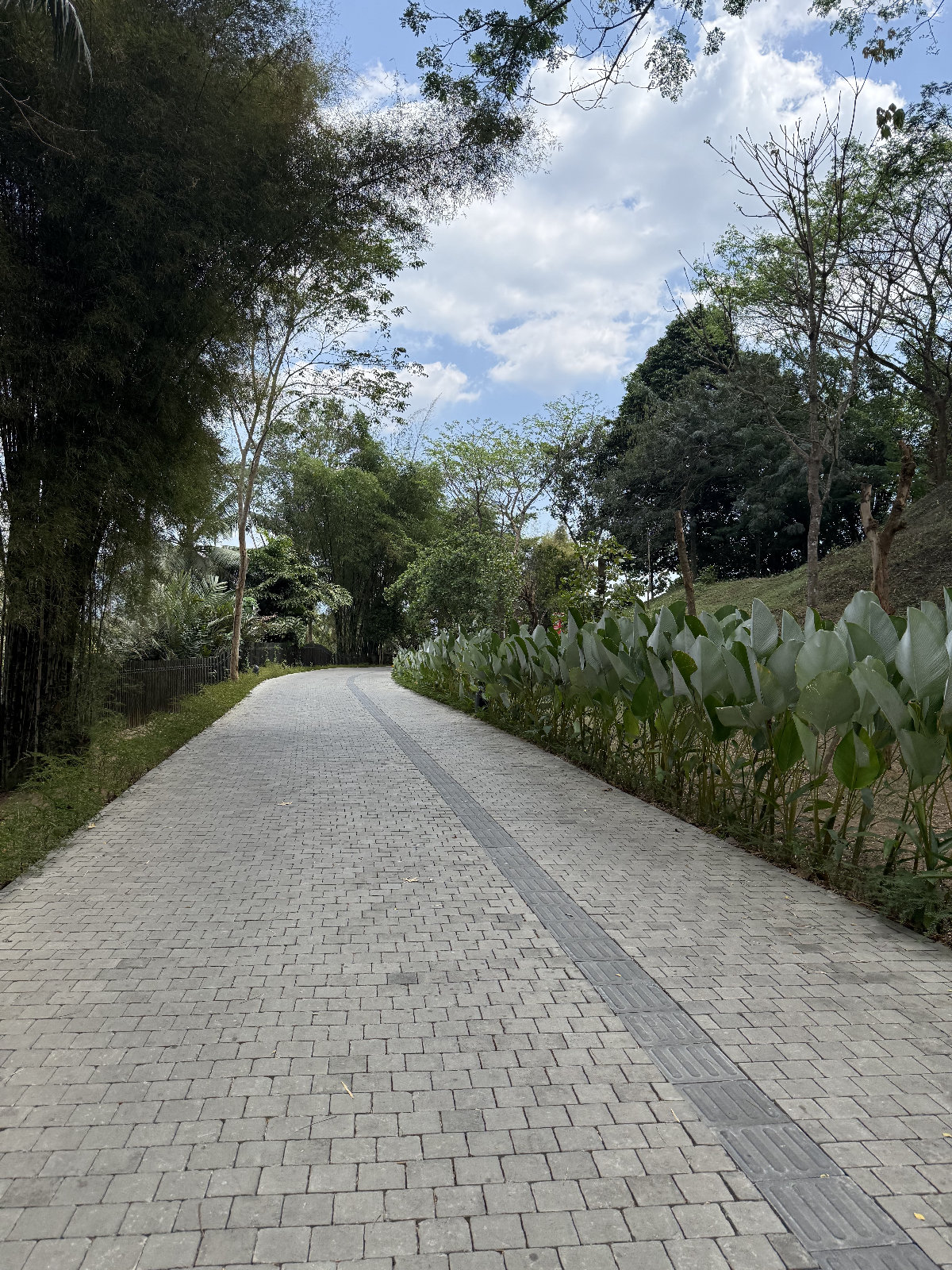
After finishing the temple tour, visitors who wish to explore further can do so, or walk toward the exit. The path leading to the exit was a neatly paved walkway, lush and green like a forest. Although it was a somewhat long stretch of about 1 km, the green trees and clean paving stones made for a pleasant, engaging walk.
The Sky-Piercing Hindu Miracle, Prambanan Temple
After completing the tour of Borobudur, I boarded a car and headed straight to Prambanan Temple, located east of Yogyakarta. It was a long journey taking nearly 2 hours by car. Because the taxi driver who was waiting for me had eaten his lunch early on the way, I had to make do with a piece of bread bought from a convenience store before arriving at the temple. I was extremely hungry.
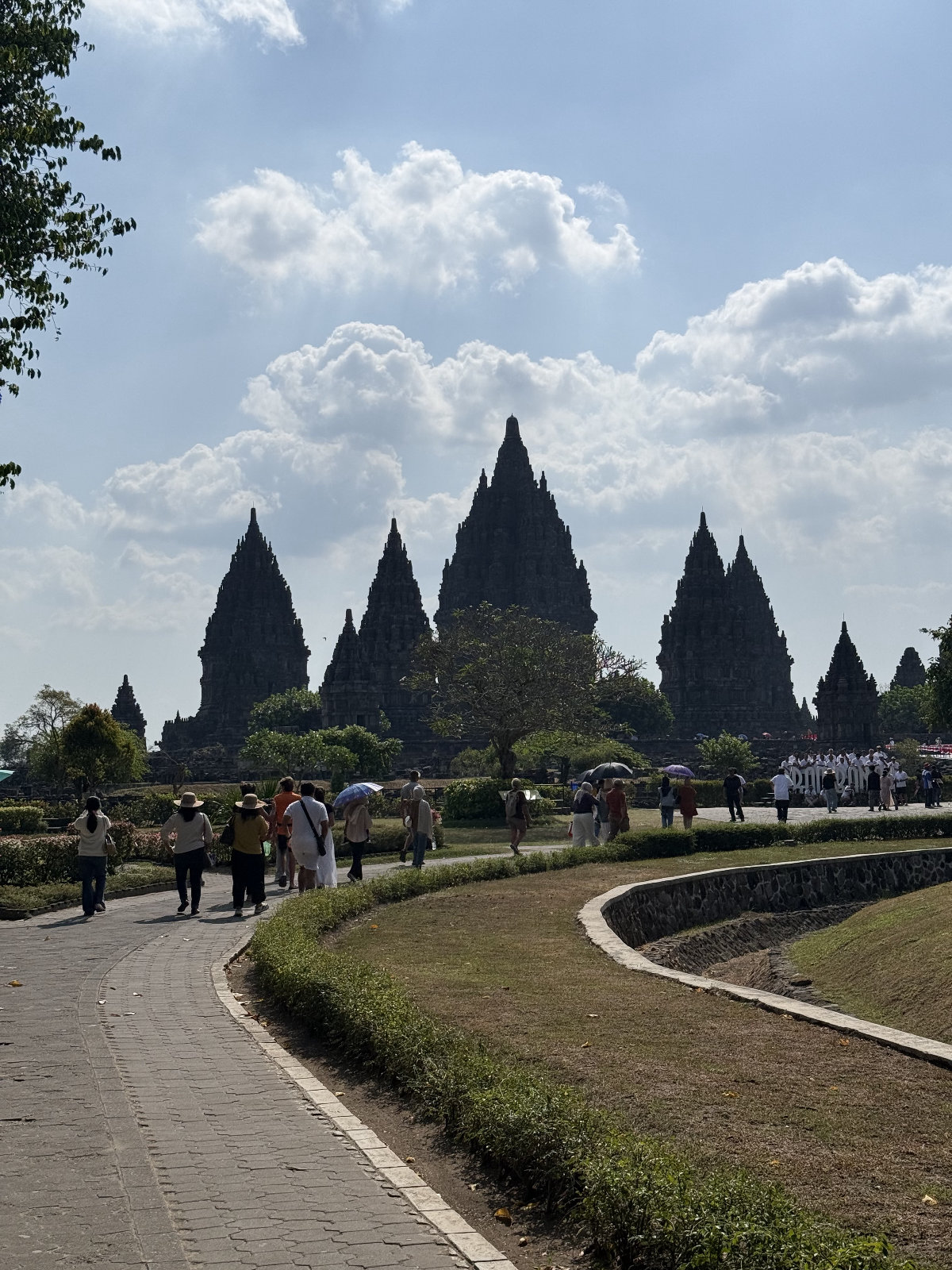
Initially, because I was hungry and tired, I thought about quickly snapping a few photos and heading back to the accommodation. However, the moment I stepped through the temple entrance, I had no choice but to stop in my tracks, transfixed by its overwhelming presence. Built in the 9th century during the Sanjaya Dynasty, Prambanan is the largest Hindu temple complex in Indonesia. It was constructed to honor the three great Hindu deities—Shiva, Vishnu, and Brahma. Its sharp, towering, Gothic-style vertical stone structures beautifully showcase typical Hindu architectural characteristics.
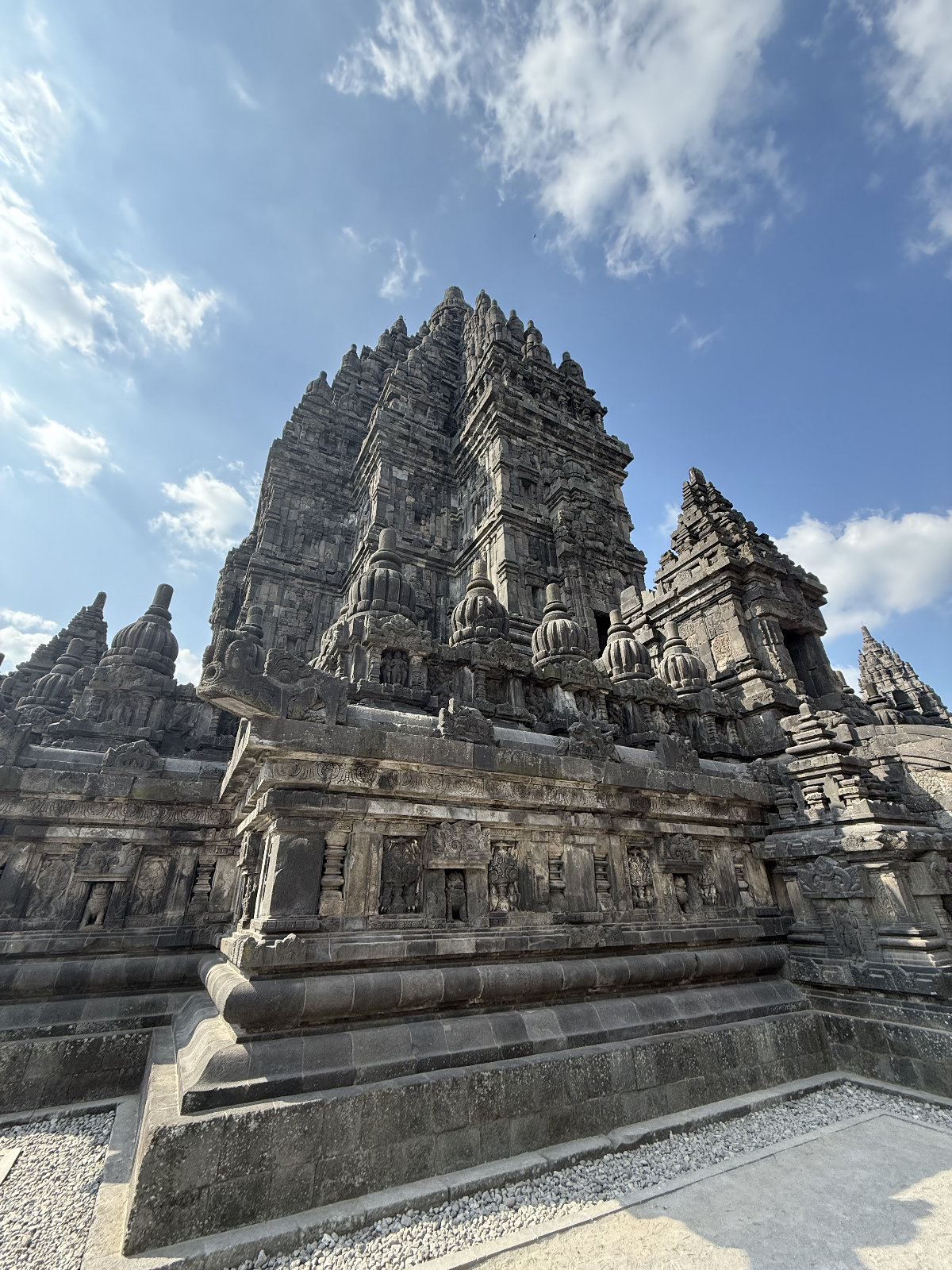
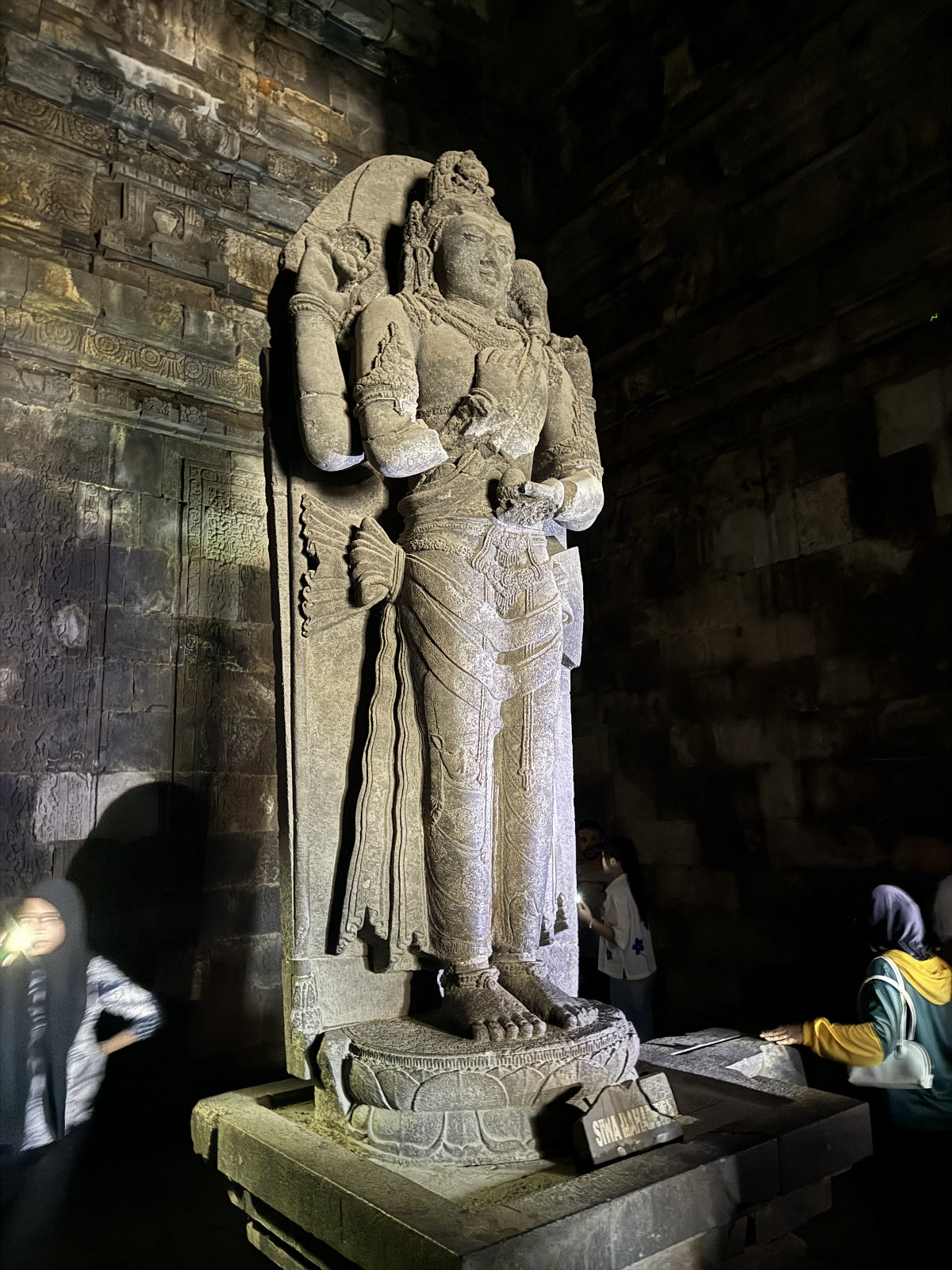
I climbed the internal stairs of the 47-meter-tall Shiva Temple, located at the very center, and went inside. In the middle of the dark chamber stood a massive stone statue of Shiva Mahadeva, positioned on a lotus pedestal. The mysterious shadows of the deity cast under the faint light offered a quiet, weighty solemnity. While the close-up details of Prambanan Temple are magnificent, its grandeur reaches its absolute peak when you step back slightly to view the silhouette of the entire complex.
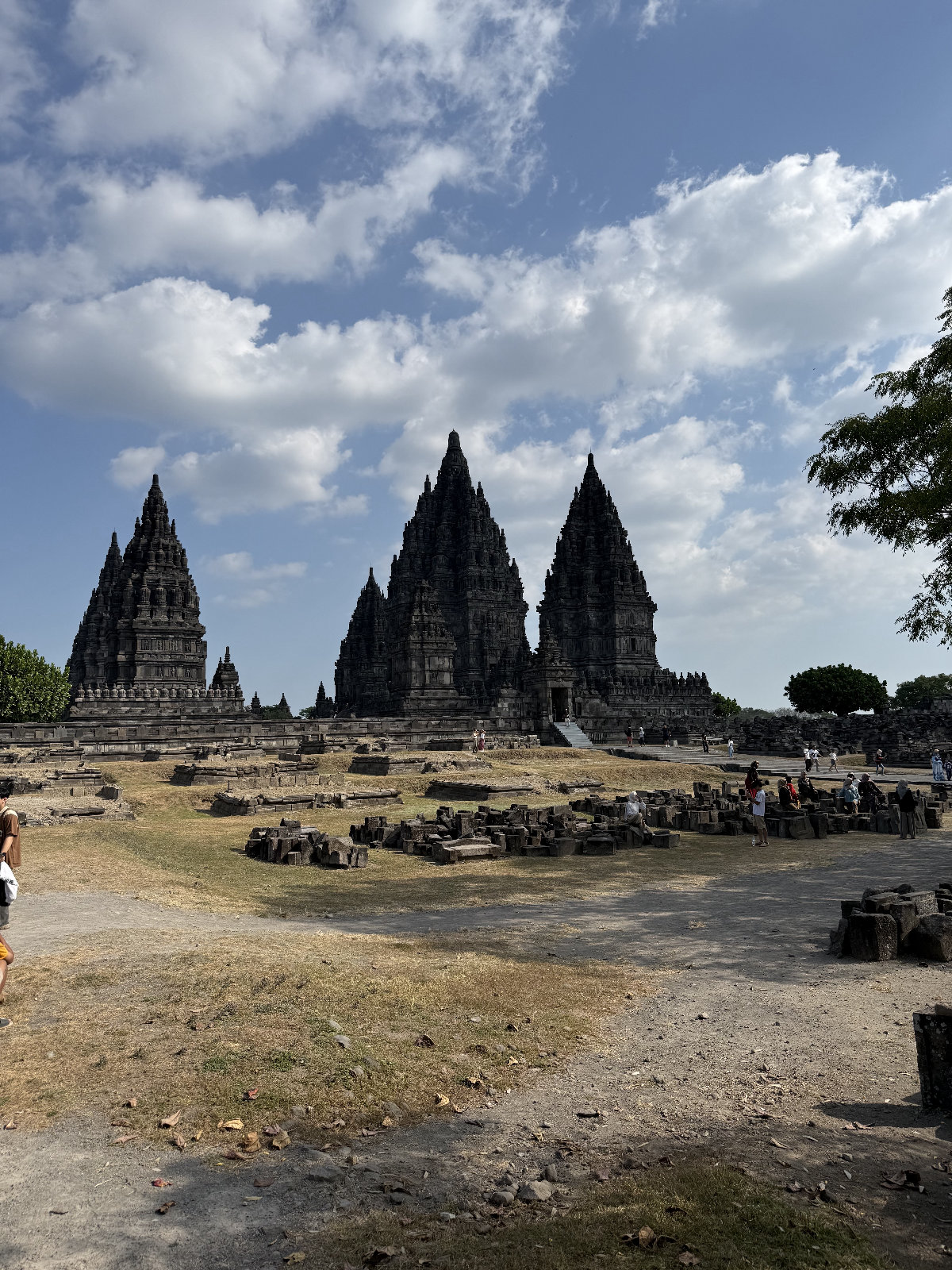
Gazing at the entire temple complex across the wide lawn, I quietly reflected on the history of this great heritage site, which has survived and been rebuilt after numerous earthquakes. Knowing that the piles of stone completely collapsed by the great earthquake of the 16th century were meticulously reassembled one by one through rigorous historical verification made the locals' pride completely understandable.
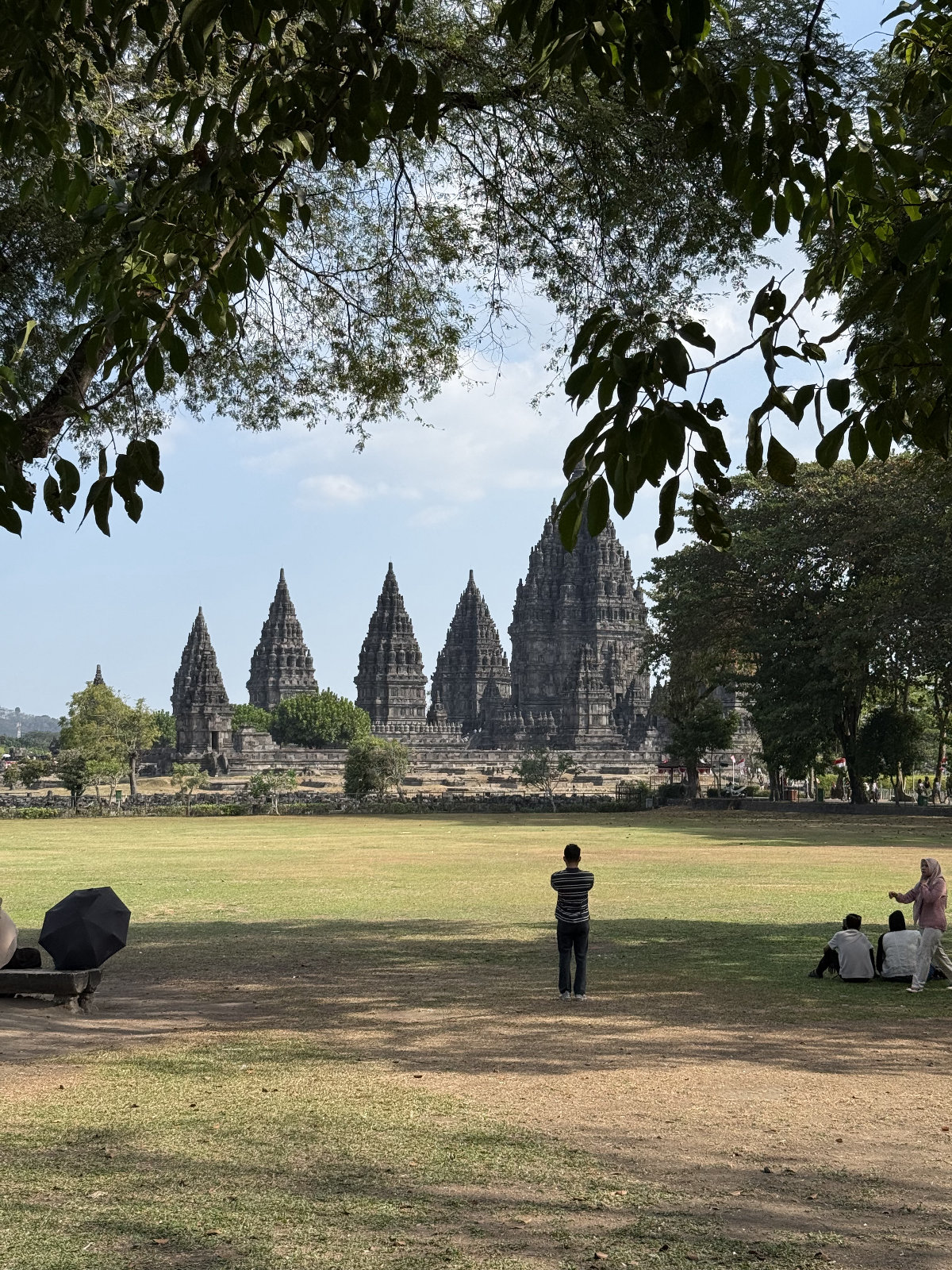
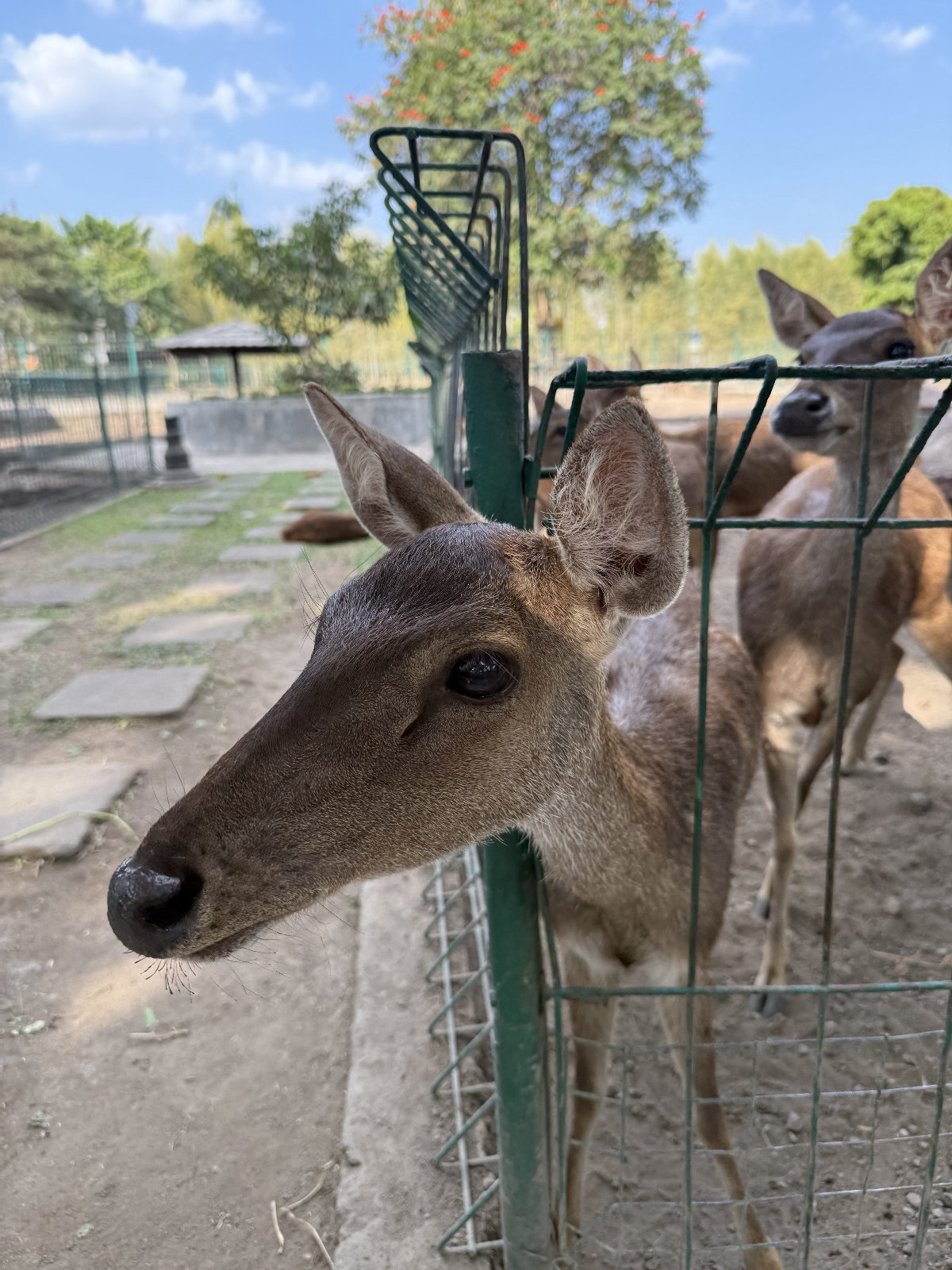
Prambanan also had a fairly long exit path. Along one side of the exit route, a small mini-zoo was set up, where deer behind a wire fence greeted visitors. I could feel the thoughtful care put into making the walk pleasant for visitors even as they left after viewing the temple.
The Sweet and Savory Flavors of Yogyakarta: Gudeg and Satay
At 3:20 PM, I boarded the car again and headed toward the accommodation. Having conquered two massive monuments representing Buddhism and Hinduism in a single day, it was quite a tiring and tight itinerary. My stomach was empty and my energy was rapidly draining. Although I live the free life of a digital nomad, choosing only a city without plans and finding the next day's itinerary from my lodging, lately I seem to be wandering around excessively and draining my stamina for someone without a plan. I resolved to camp out in a cafe tomorrow, sip sweet drinks, and focus on my main job.
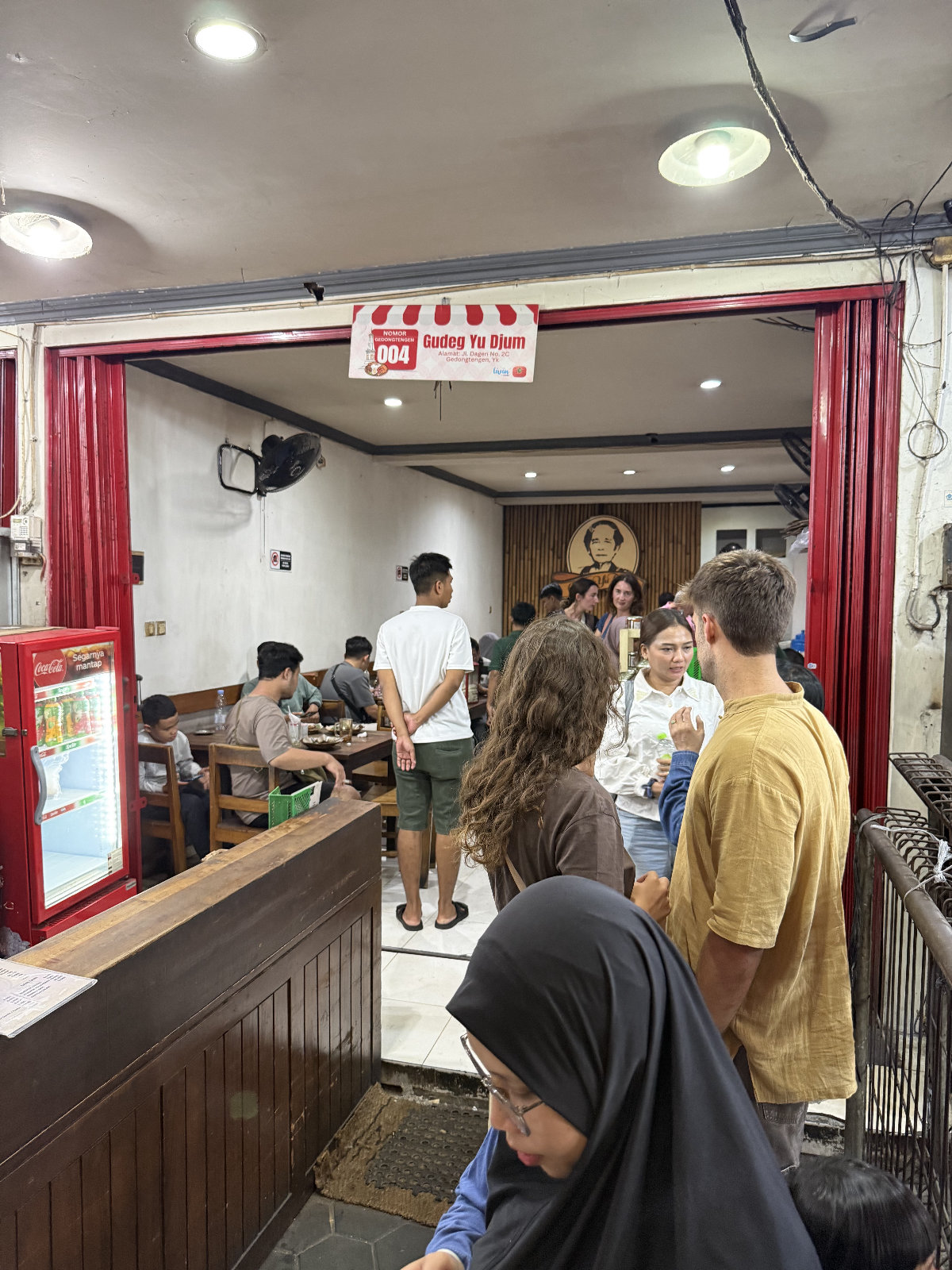
While catching my breath at the lodging, 'Gudeg', the signature traditional dish of Yogyakarta that the driver had recommended in the car, suddenly flashed through my mind. Gudeg is a regional specialty made by slow-simmering young jackfruit with palm sugar, coconut milk, and various spices for several hours. I visited 'Gudeg Yu Djum', the most famous restaurant for gudeg. Because there were too many waiting customers, I gave up on dining in and decided to order takeout. On my way back, I also stopped by a street satay stall, where skewers were being grilled over fragrant charcoal embers, and bought some grilled skewers.
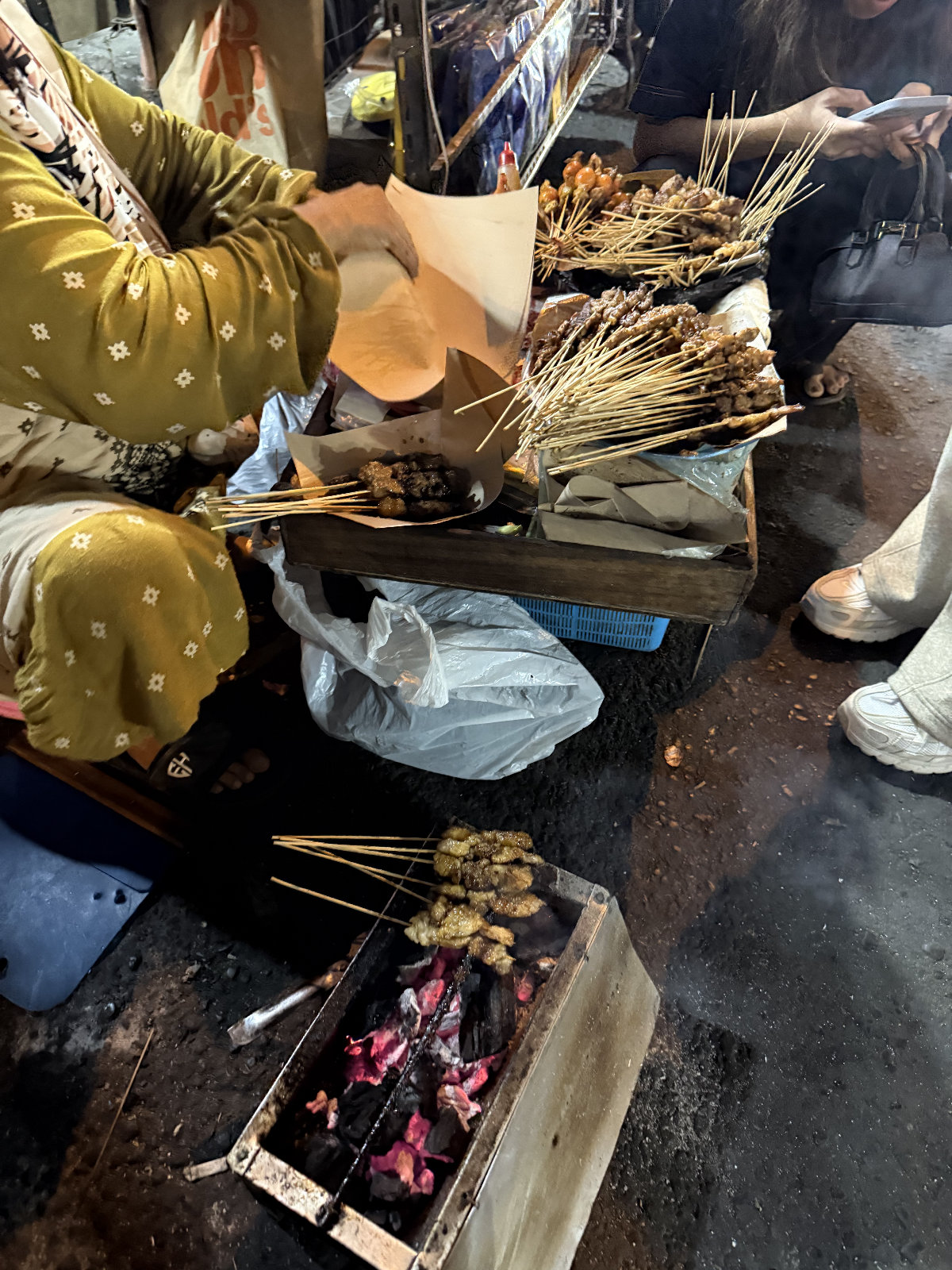
Upon returning to the lodging, I opened the takeout box of gudeg and laid it out alongside the satay. When I ordered the chicken part, they called it 'upper meat', so I assumed it would be wing meat, but when I actually bit into it, it was a plump thigh. The chicken, richly simmered in coconut milk and palm sugar, was not tough at all and had a wonderfully chewy texture. It felt like eating chicken beautifully simmered in Korean soy-sauce-braised pig's trotters seasoning. The sweet yet savory flavor paired exquisitely as a side dish with rice.
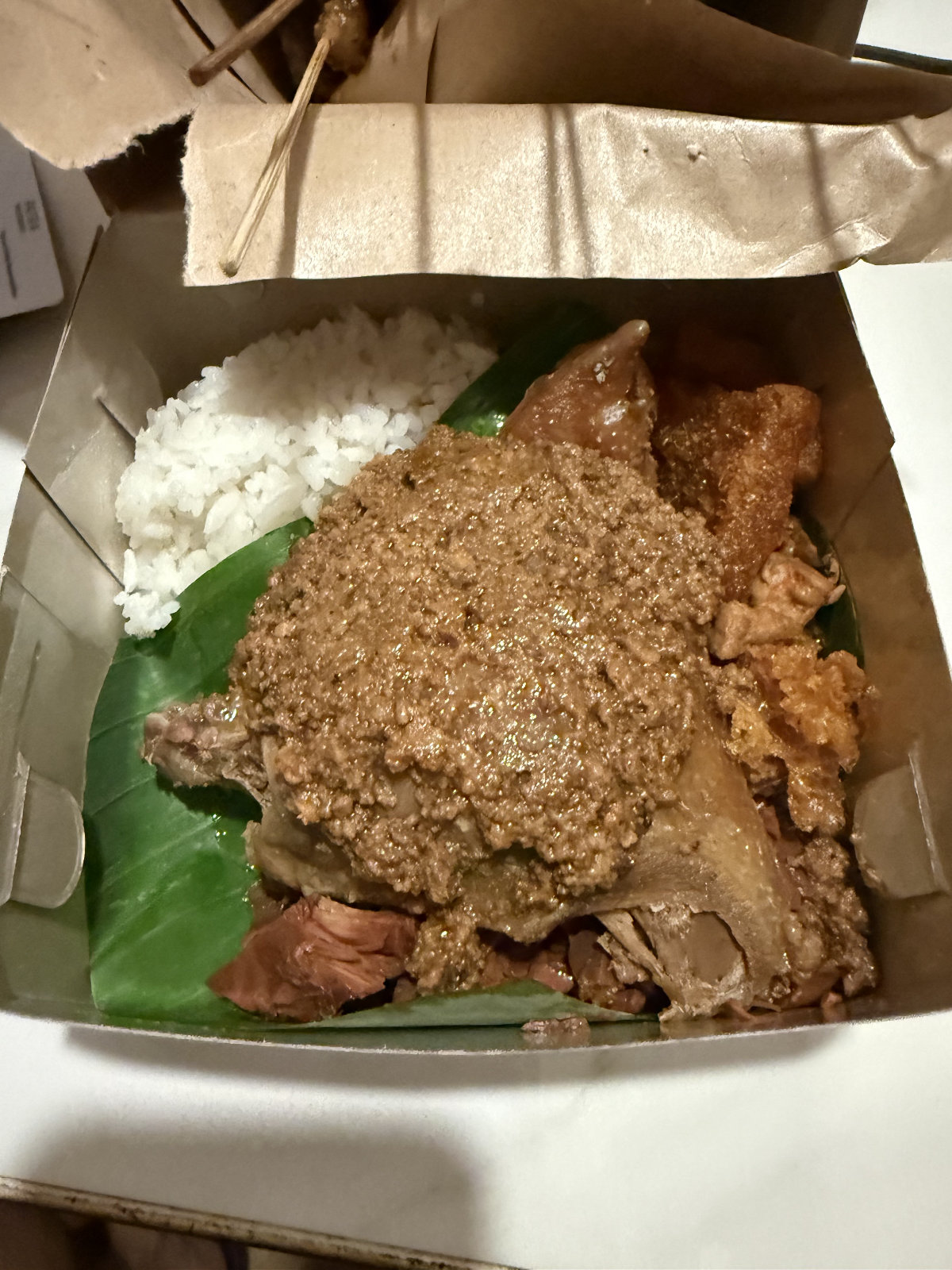
"I really had a productive day today," I muttered quietly to myself as I took a bite of a golden-brown satay skewer. Although it was a day spent moving wherever my feet took me without any special plans, the weight of distant eras conveyed by the massive stone temples, combined with a late-night feast rich in local color, deeply etched the charm of Yogyakarta into my heart. Patting my full stomach, Yogyakarta's night deepens as I picture tomorrow's relaxed cafe itinerary.