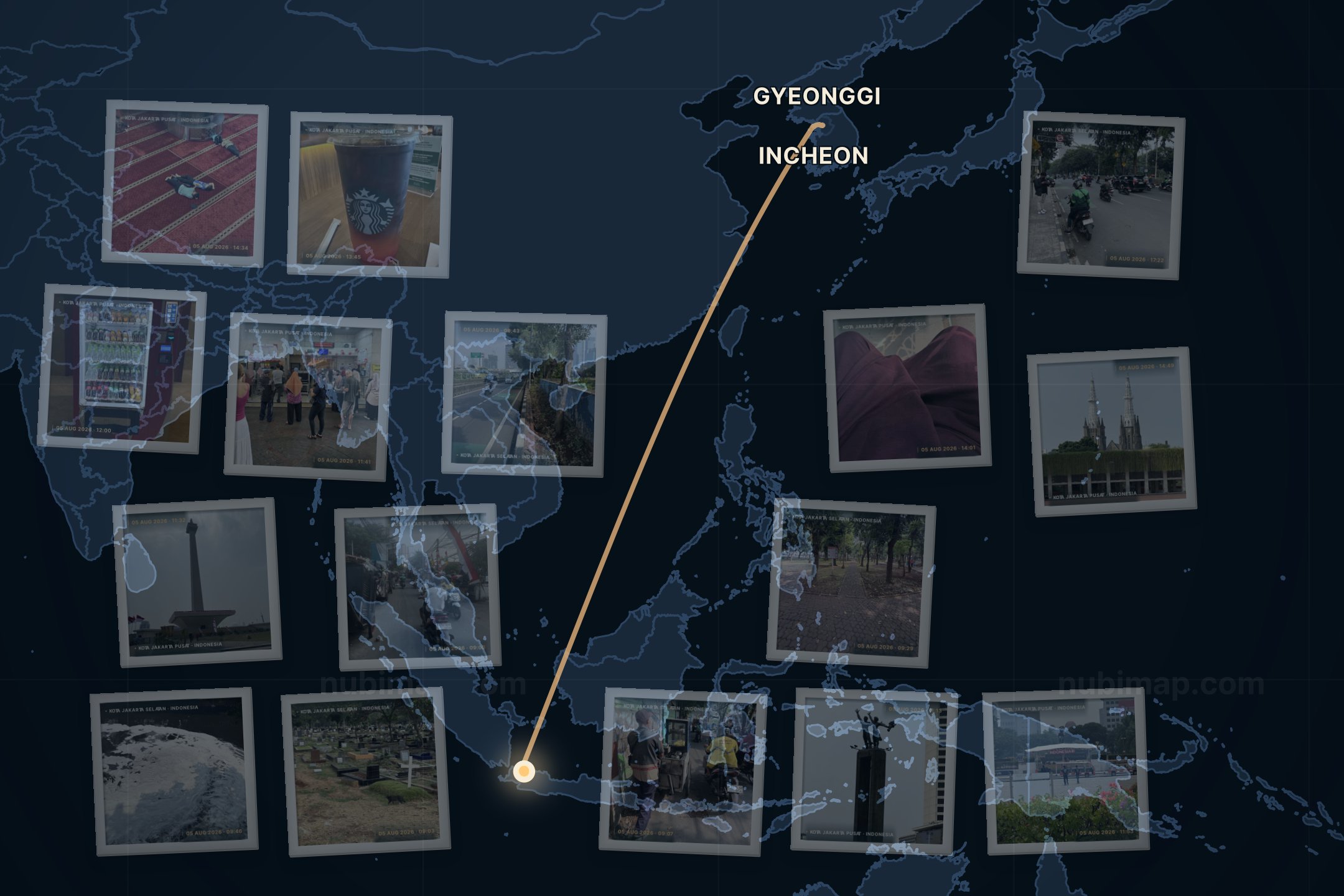
Jakarta: The Very First Day I Walked Wherever My Feet Led Me
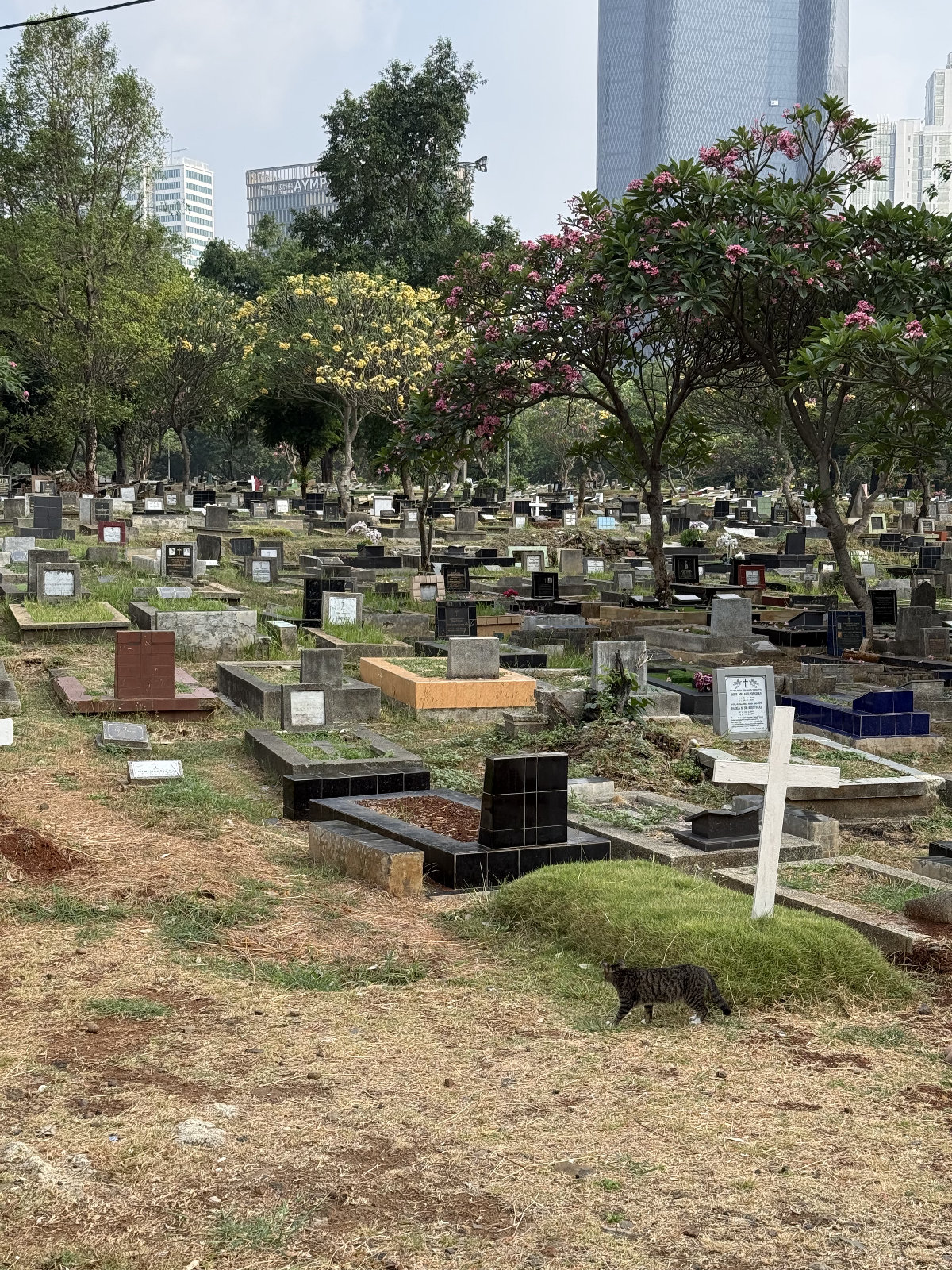
The best way to get to know a new city is to walk it on your own two feet. Instead of using a guidebook or a flashy blog post, I set out blindly along the path guided by Google Maps. At 9:00 AM on the morning of my first day in Jakarta, the clear, humid air of 28 degrees Celsius clung to my skin, but my heart pounded with excitement for the unfamiliar scenery. As soon as I entered an alley leading behind the forest of glittering skyscrapers, the first place I encountered was a peaceful cemetery. Among the quiet tombstones set amidst lush frangipani trees, a single cat strolled silently. Above my head, dizzyingly tall modern skyscrapers surrounded the area like a folding screen, while beneath my feet, peaceful graves bearing the marks of time created a stark contrast. Life, death, and the rapid development of the city were quietly breathing together in one place.
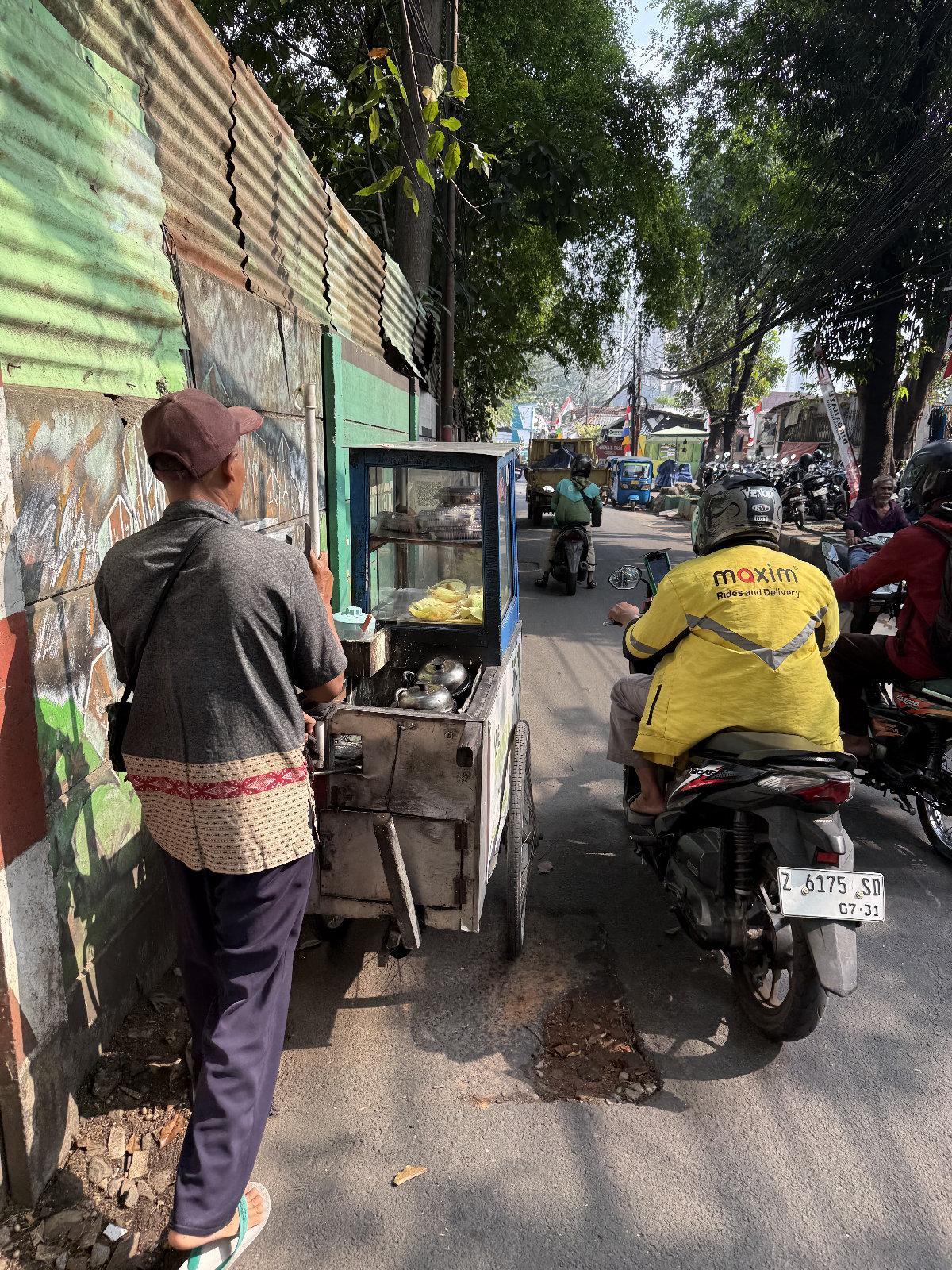
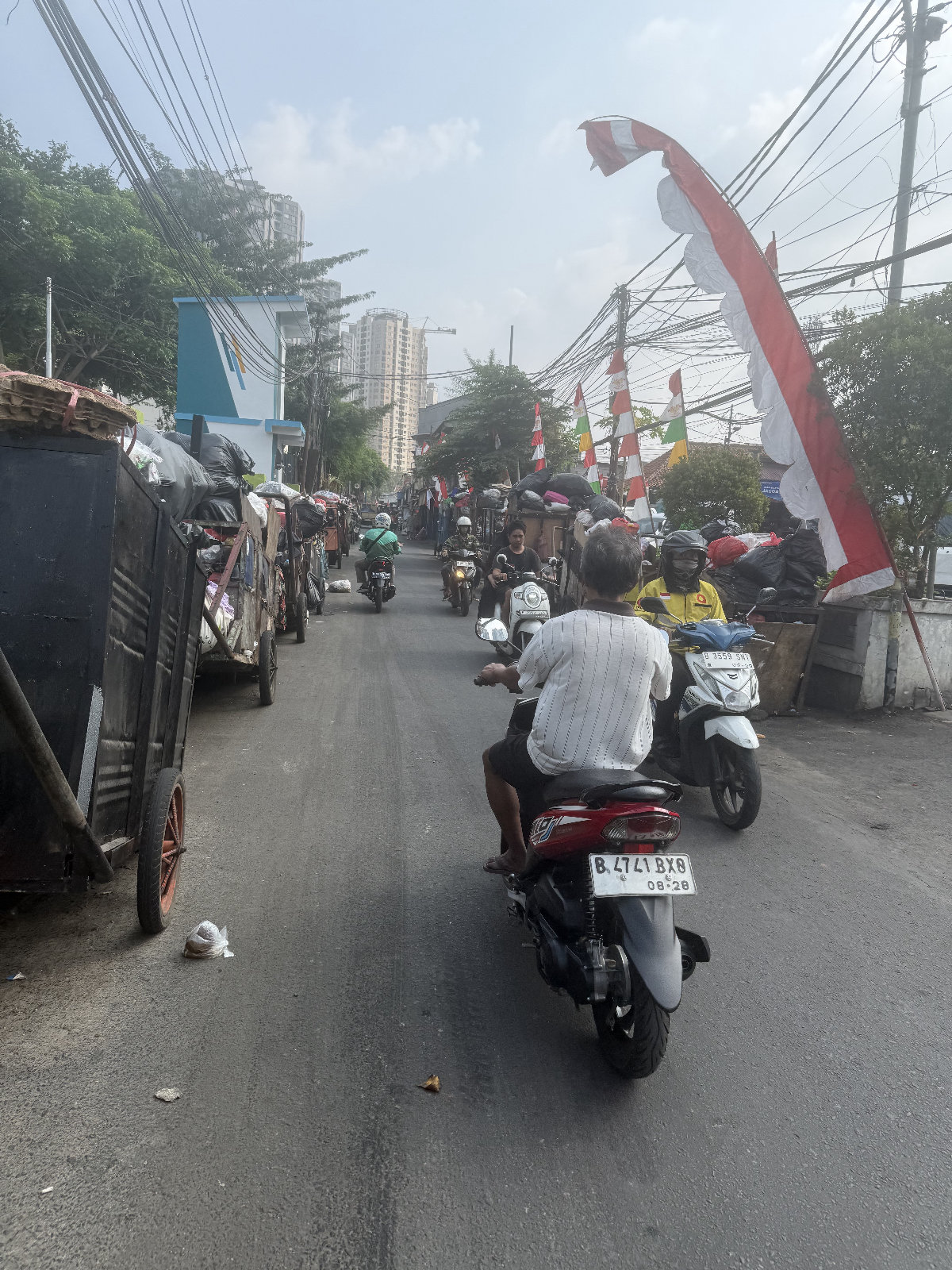
The route guidance on Google Maps was not a smooth path paved for tourists. Perhaps it was the deeper intention of the map app to show the actual trajectory of Jakarta people's lives exactly as it is. As soon as I left the cemetery, the alley narrowed sharply, and the raw, daily lives of the people unfolded. A delivery motorcycle wearing a yellow anorak roared past, while a merchant quietly pushed a handcart loaded with snacks and daily necessities beside it. Moving one step further, garbage collection points and carts gathered by local residents lined the roadside. The acrid smell of motorcycle exhaust and the damp, musty odor unique to narrow alleys struck my nose, but the red and white Indonesian flags hanging along the streets and the bright eyes of the people added vital energy to life.
An Unexpected Oasis Met After Passing Rough Canals and Roads
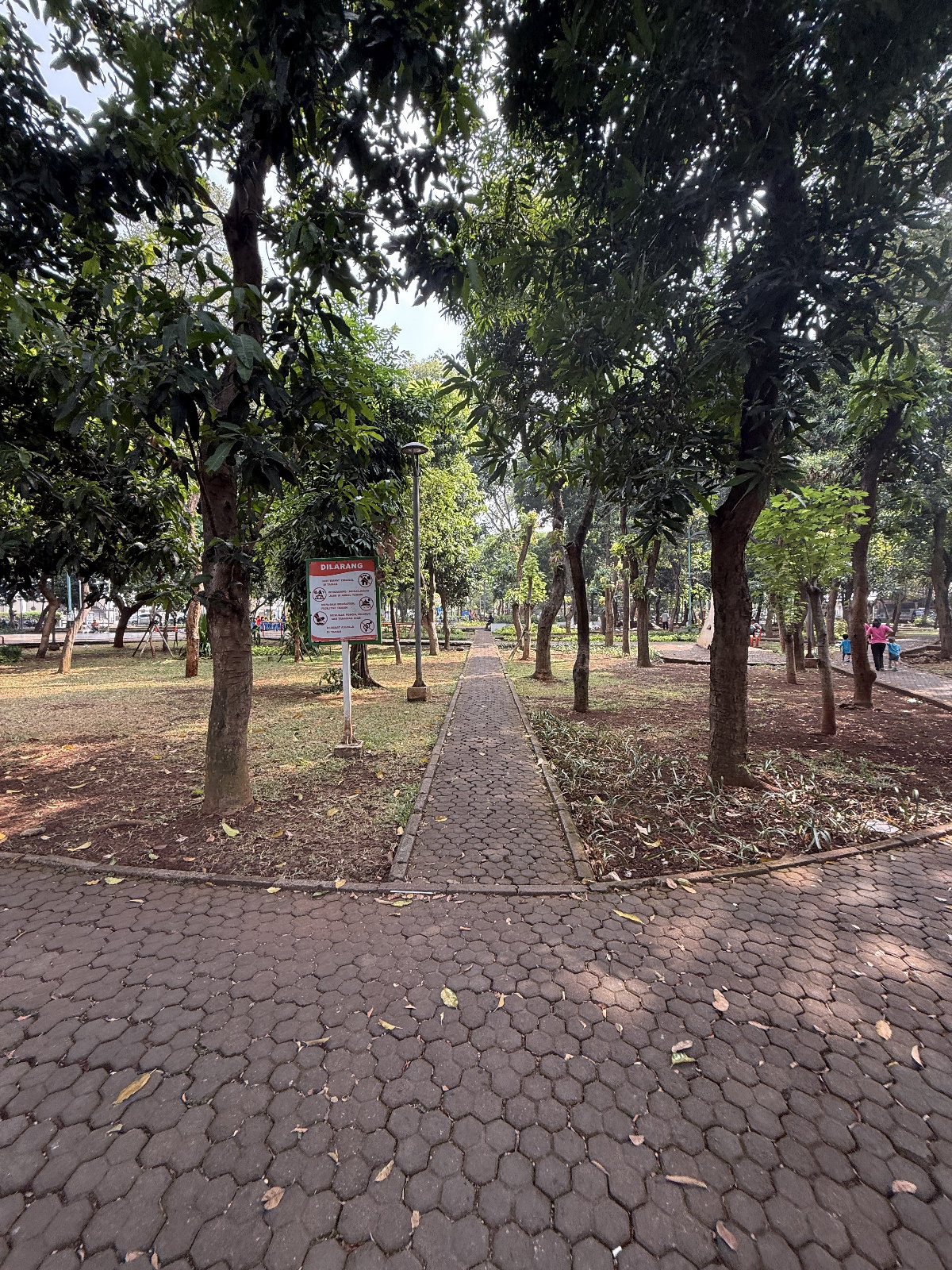
After walking silently through the scorching sun and exhaust fumes for nearly 40 minutes, an unexpected buffer zone appeared. Having passed through the rough narrative of Jakarta's southern alleys, the urban park I reached was a perfect safe haven. Thanks to the deep shade created by green branches hanging over the red sidewalk block patterns, and the people leisurely gardening or resting, my tightly wound tension finally eased. Catching my breath for a moment and cooling off under the shade of a tree, I felt the unexpected stillness hidden within the city of Jakarta.
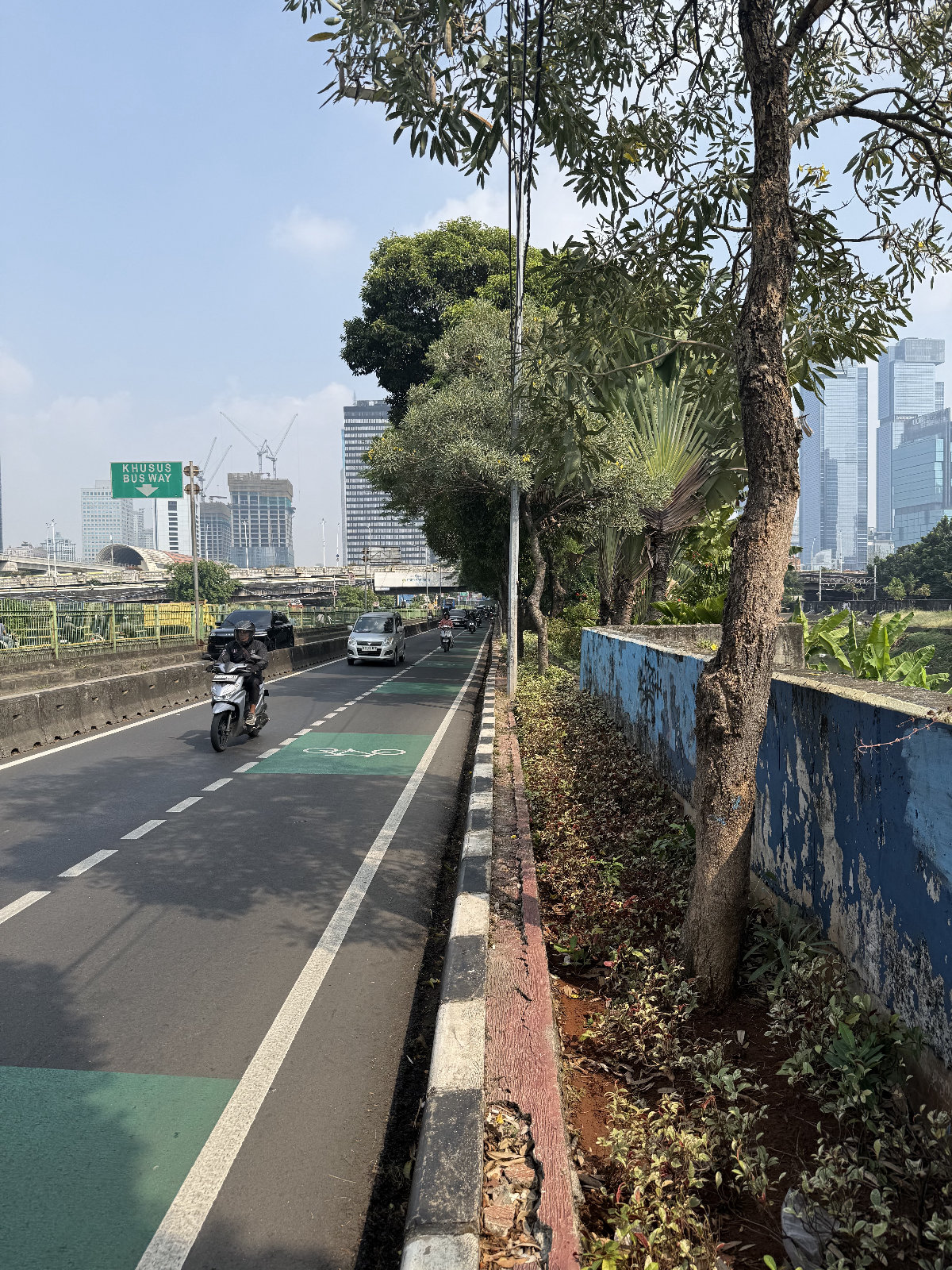
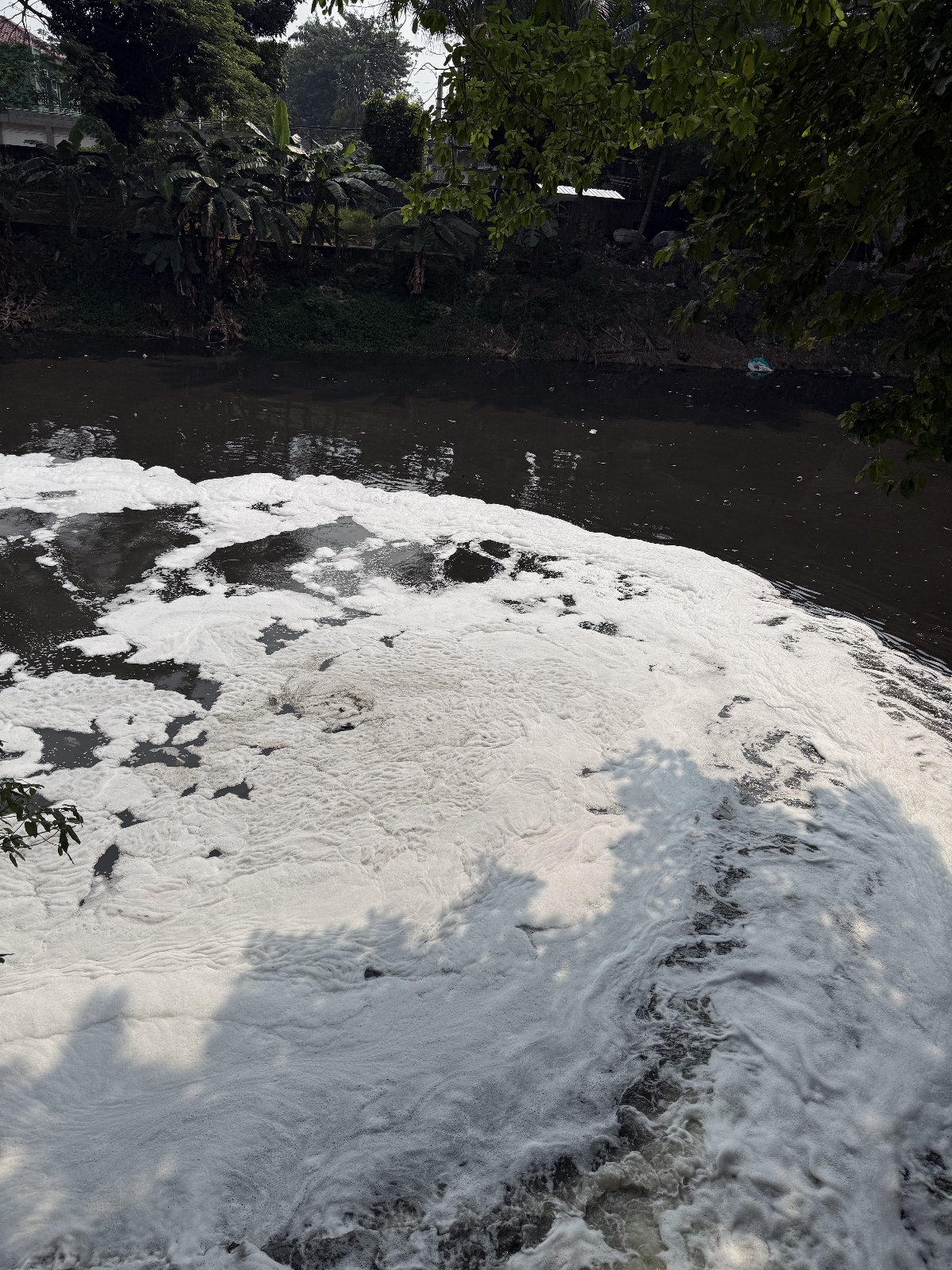
However, the peace did not last long. As soon as I left the park, a massive canal and roadway appeared. A floating trash barrier was installed over the murky water of the canal, and cars and motorcycles sped relentlessly on the road opposite. In sections where the sidewalk narrowed or cut off completely, I had to instinctively find and step onto a "roadless path." At one bend in the canal, I even encountered a bizarre sight where white sewage foam floated in a huge layer like a glacier. Strangely, the discord created by the colossal high-rise buildings in the sky, the foam in the canal, and the waves of motorcycles exuded a peculiar vitality.
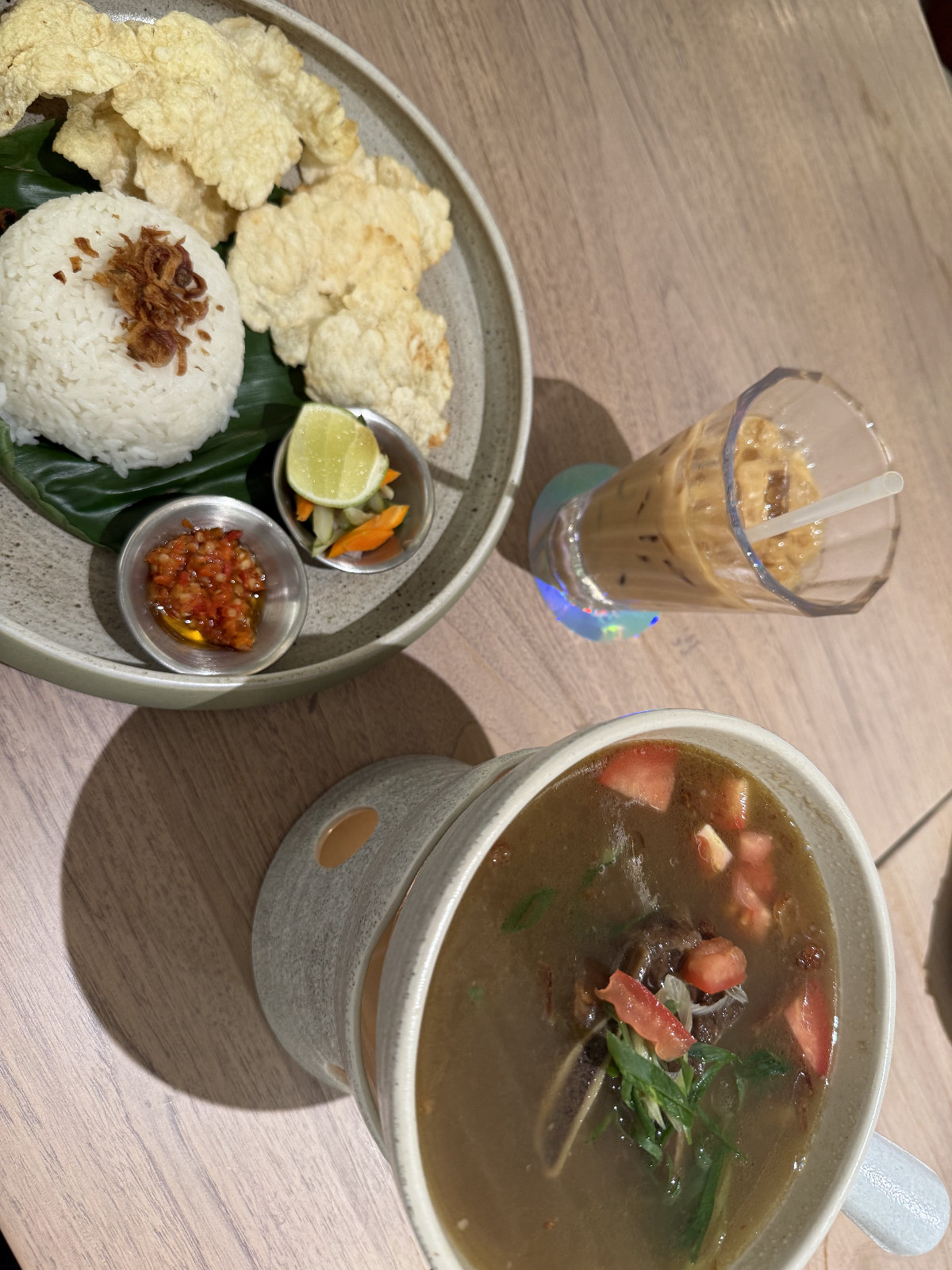
After walking for over an hour covered in heat and exhaust, I reached my limit. To survive, I blindly ran inside a nearby large shopping mall. The powerful blast of air conditioning that enveloped my body the moment the doors opened was absolute heaven. Although I felt somewhat embarrassed among the neatly dressed local shoppers because I was drenched in sweat and street dust, recovering my strength was the urgent priority right now. I went into an Indonesian restaurant inside the mall and ordered a warm soup dish (soto) that closely resembled Korean oxtail soup or short rib soup. After tasting the clean broth as it was, I squeezed in the lime that came with it, which brought the refreshing savory flavor to life. Not knowing how to eat the crispy emping crackers served beside the rice, I asked ChatGPT, which told me to "dip them lightly in the soup or dip them in sambal sauce." When I dipped them in the soup as instructed, the crispy yet pleasantly bitter nuttiness combined exquisitely with the broth.
Monas, the Symbol of the City Center, and the Salvation of a Cool Cup of Coffee
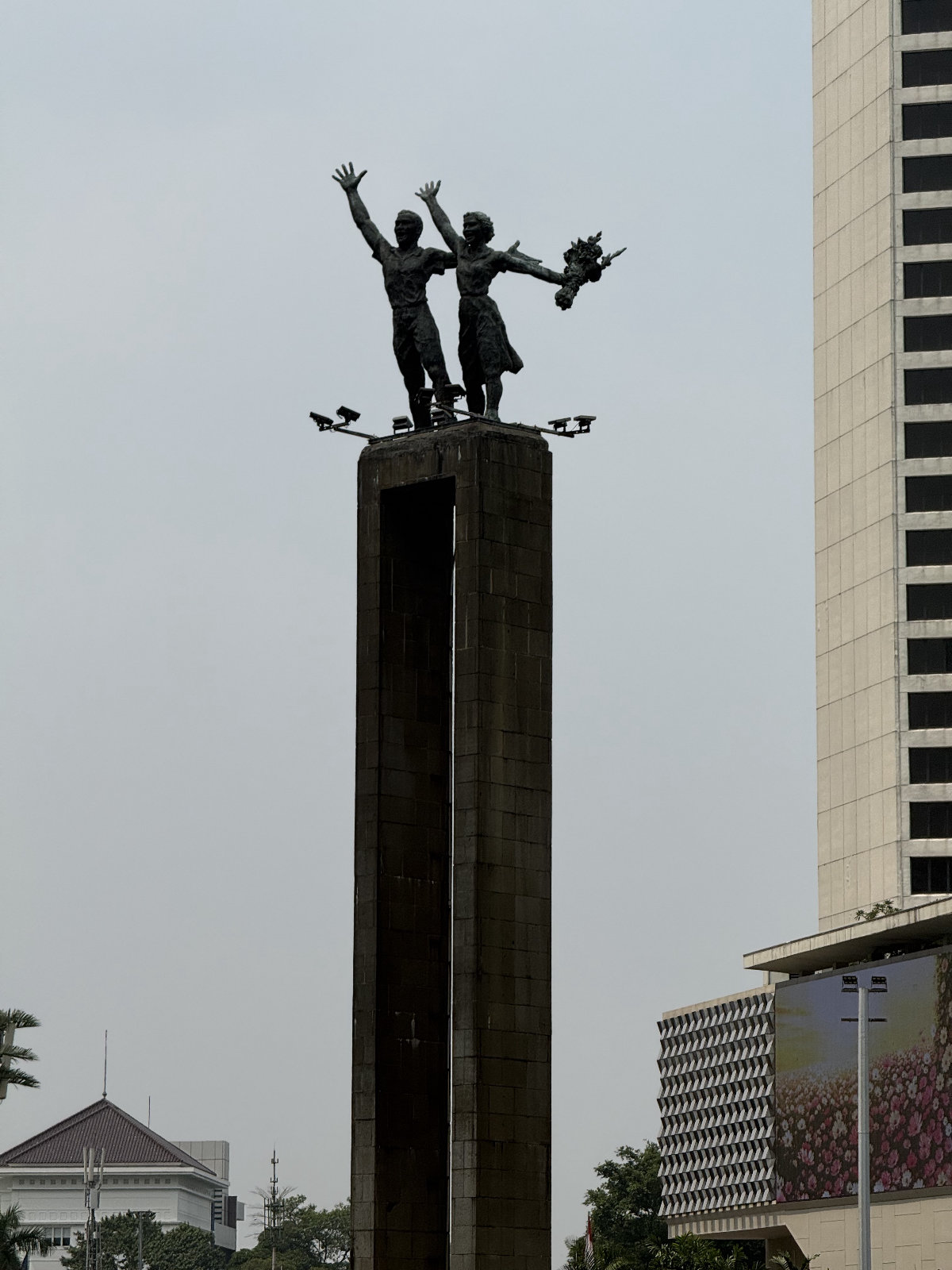
Re-energized after having lunch, I turned Google Maps back on. I discovered that the statue I had passed by while entering the shopping mall earlier was actually the historically significant "Selamat Datang Monument" (Welcome Monument). Walking back up the path I came from, I captured a photo of the statue welcoming the city center with both arms raised high. Erected in 1962 to welcome guests from all over the world visiting Jakarta for the Asian Games, this dynamic statue boasted the city's energy right in the middle of a modern forest of buildings.
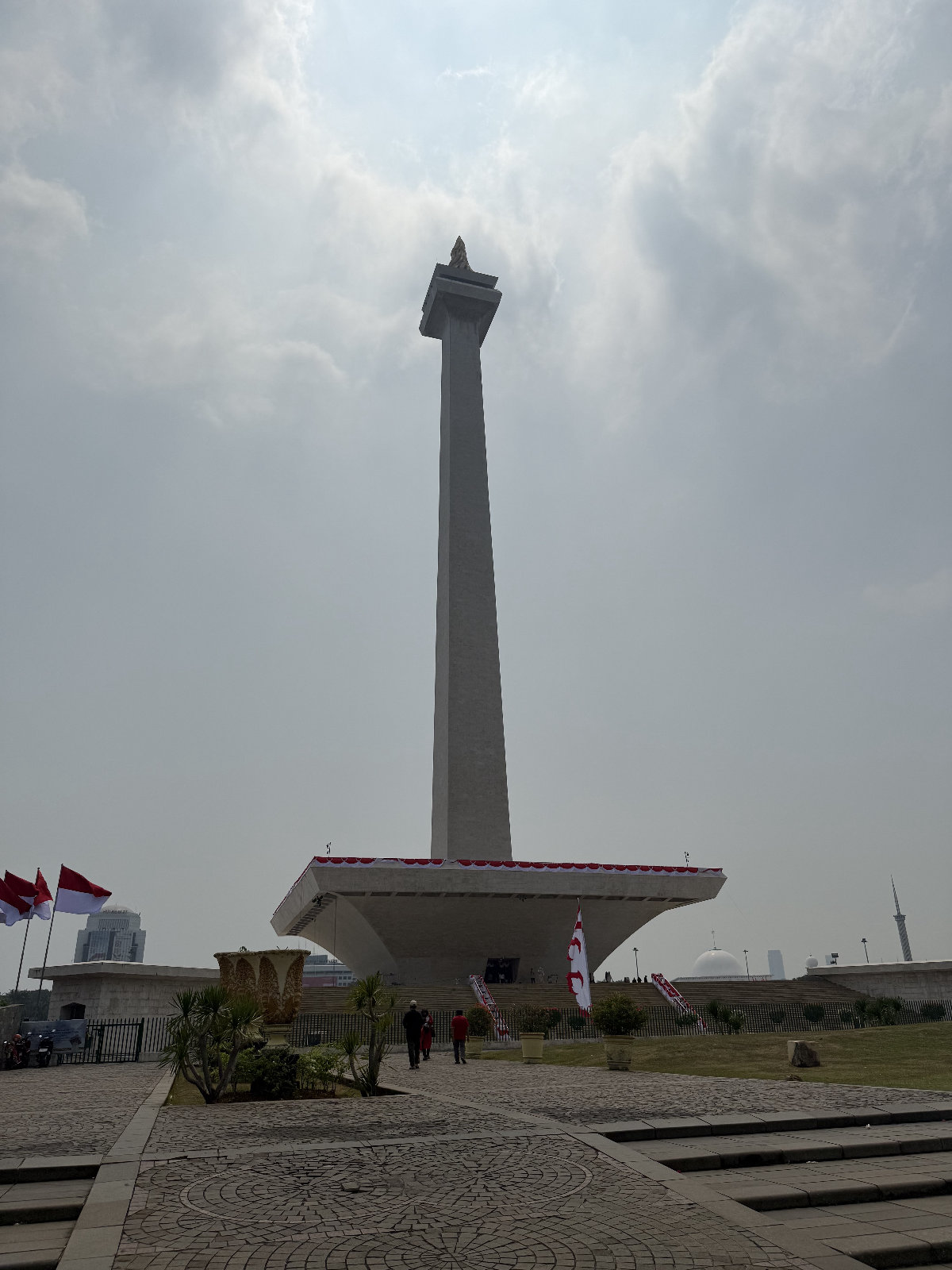
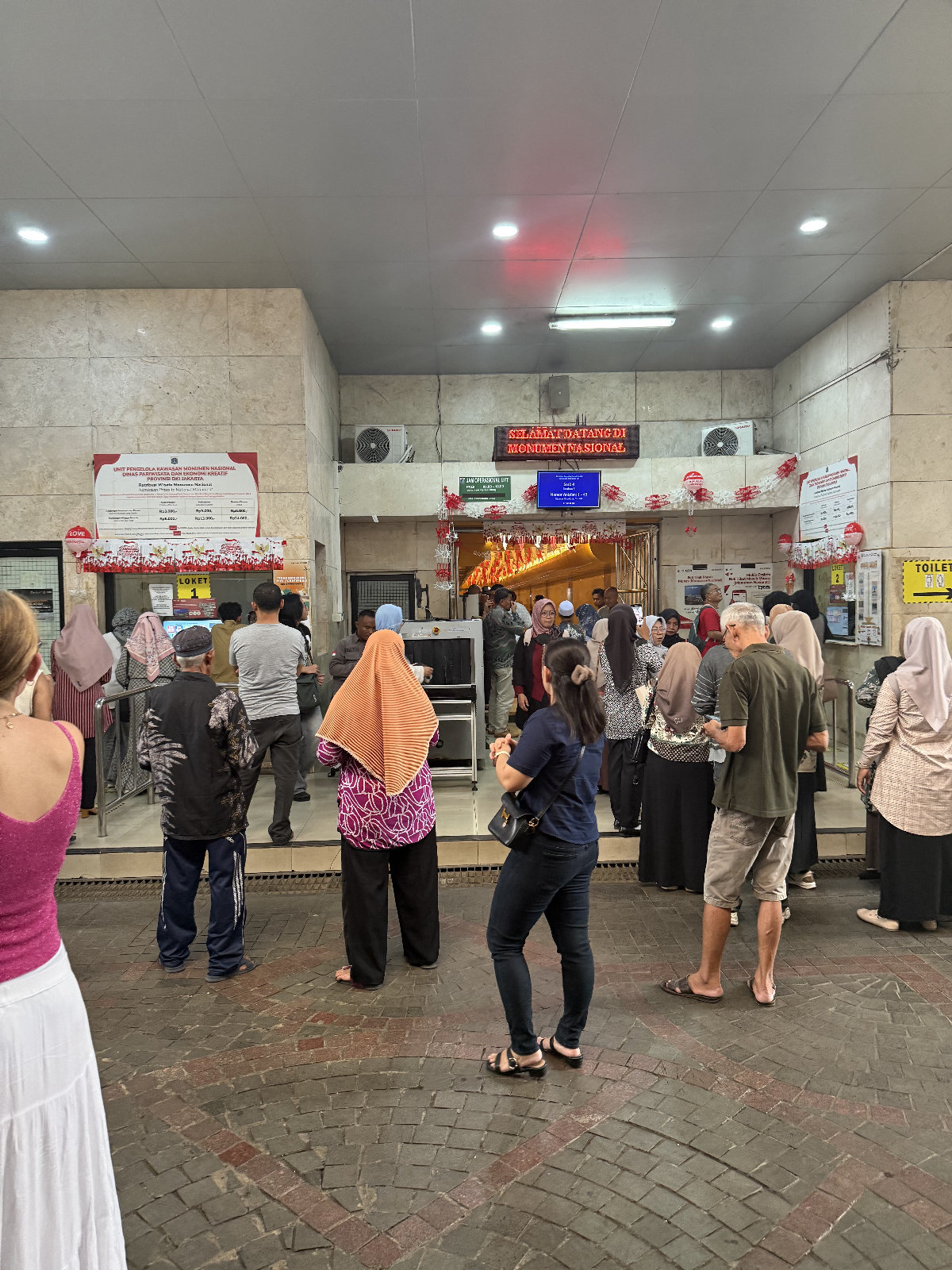
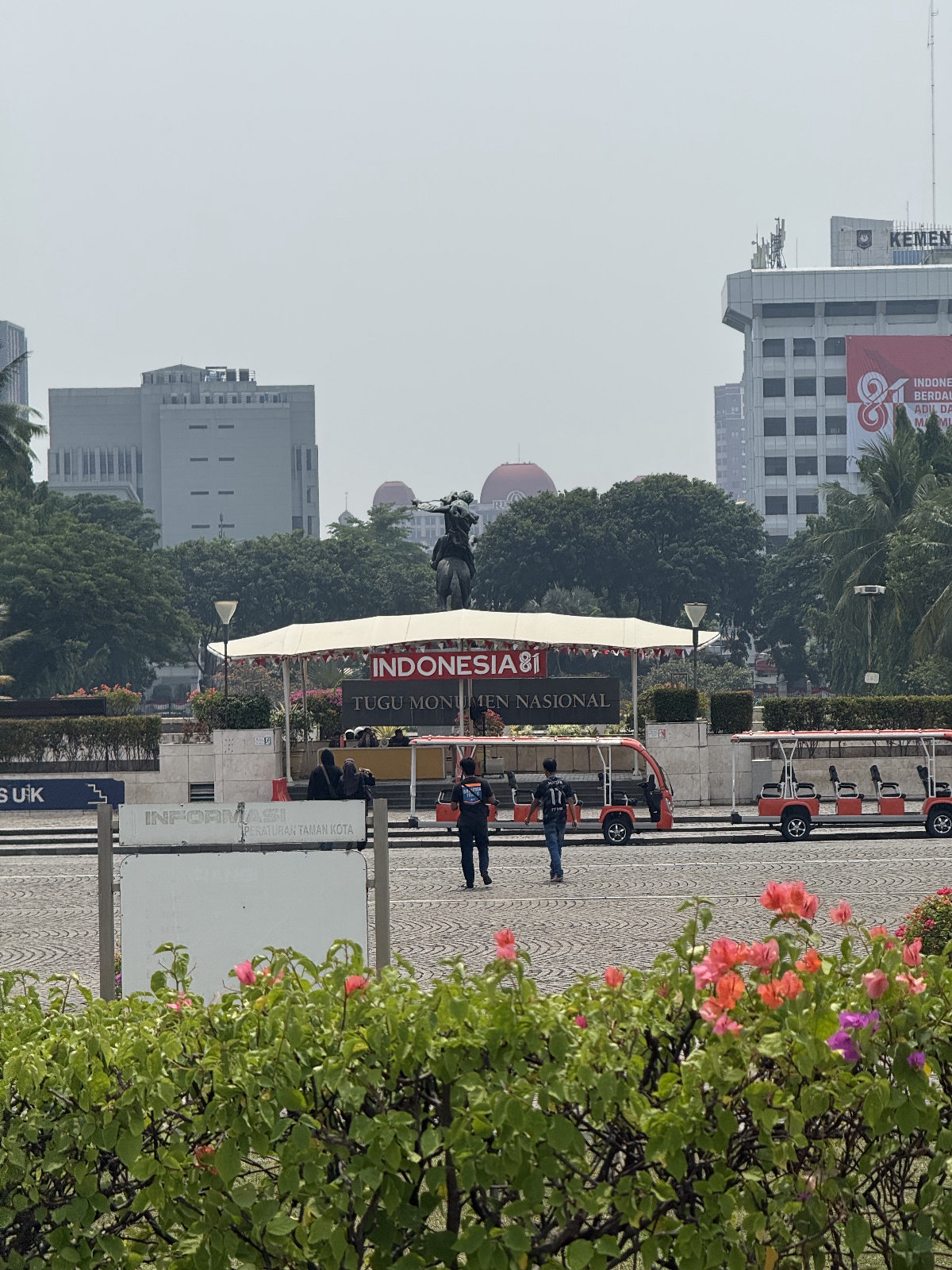
The next place I visited was Monas (National Monument), the symbol of Indonesian independence. Although it looked grand from afar, as I drew closer, I was overwhelmed by the majesty of the 132-meter-tall marble tower. However, entering the square did not mean I could go inside the tower immediately. This was because the entire perimeter of the tower was tightly enclosed by a metal fence. After wandering around the square for a while, I went to the northern end and saw a small booth leading down to an underground tunnel. It was a unique structure where you could not enter directly from the ground level, but could only buy tickets and enter the tower through an underground passage.
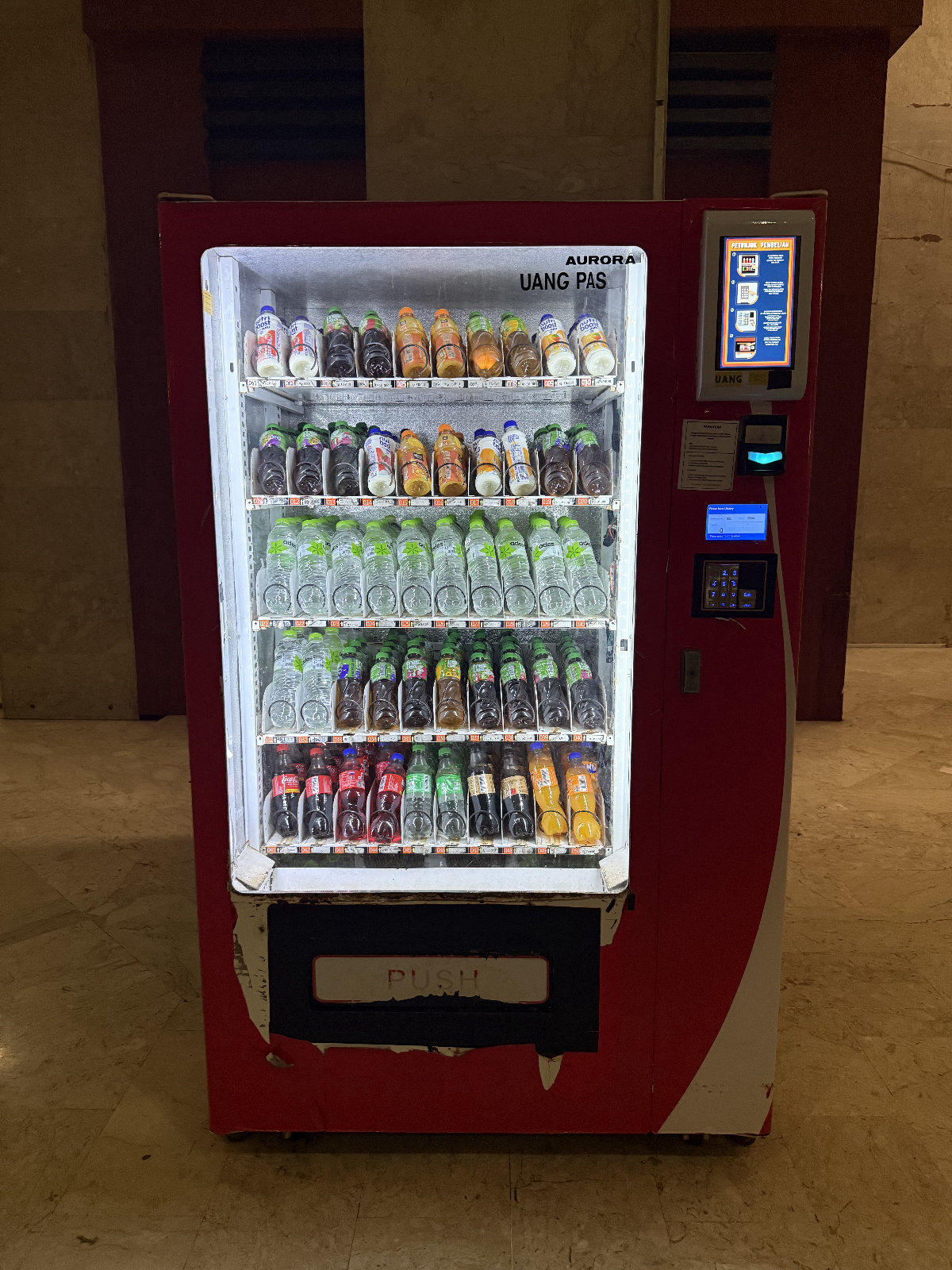
By the time I reached the underground ticket office, my throat was burning with thirst from walking under the scorching sun for so long. Fortunately, a beverage vending machine was located on one side of the underground square, so I ran to it joyfully. However, the words "UANG PAS" (exact cash only) were clearly written on the top of the vending machine. It was a machine where you could not buy a drink unless you had exact change. The bills in my wallet were only large denominations, so in the end, I had to just stare at the drinks like a pie in the sky. Thus began an ordeal where I could not drink a single sip of water for nearly the next two hours.
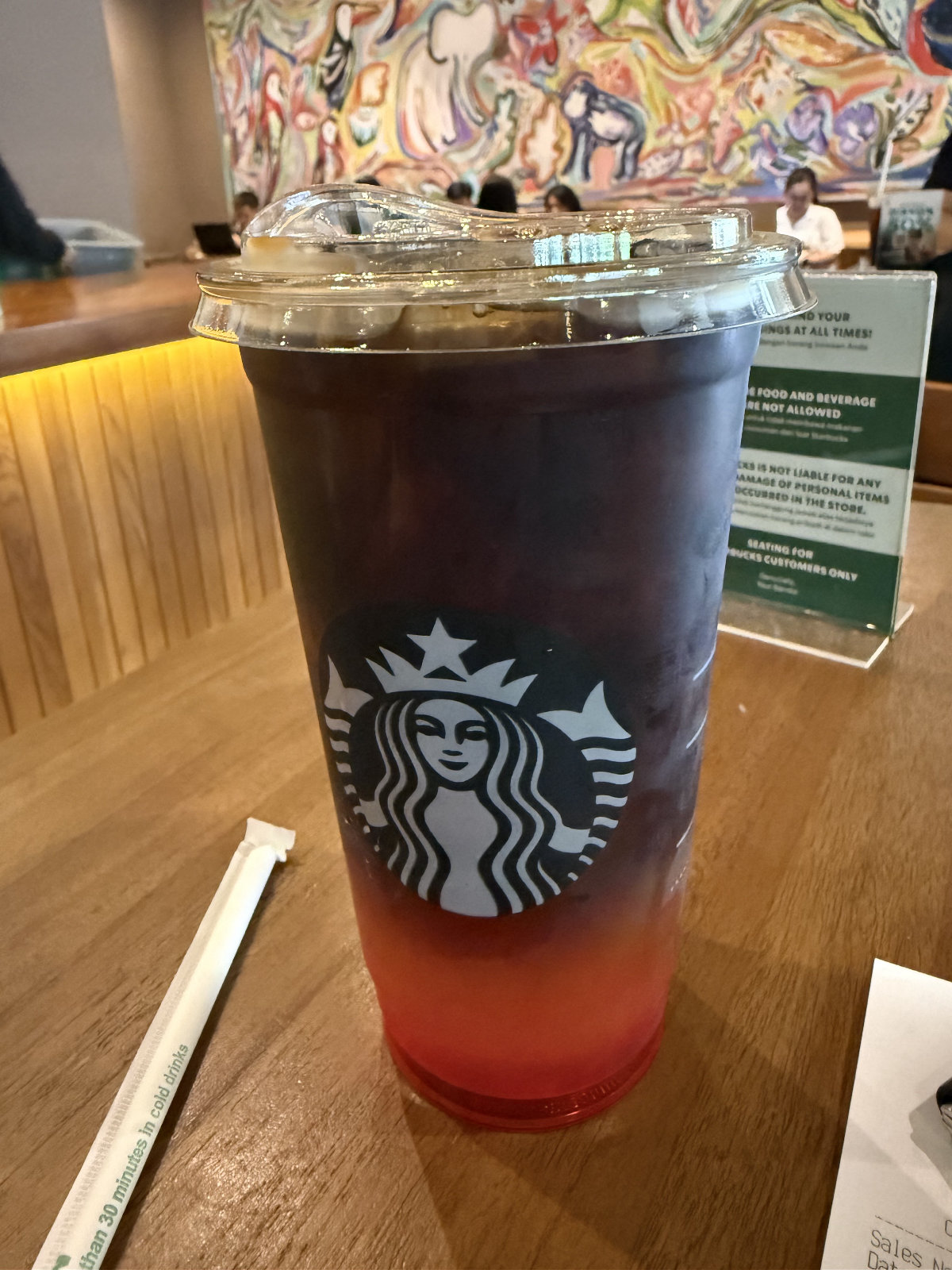
Normally, when traveling abroad, I try to use local cafes as much as possible. However, when I am extremely fatigued and thirsty, and a fear of failure creeps in, I tend to lean on the familiarity of what I know. The Starbucks I encountered after wandering for two hours without drinking anything was nothing short of an oasis in a drought. The moment I opened the door, ordered an iced drink, and took a deep gulp, a sense of relief that I would actually survive spread through my entire body. I calmly soothed my exhausted body and mind with a transfusion of cool coffee.
The Stillness of Istiqlal Mosque and the Warmth of the People
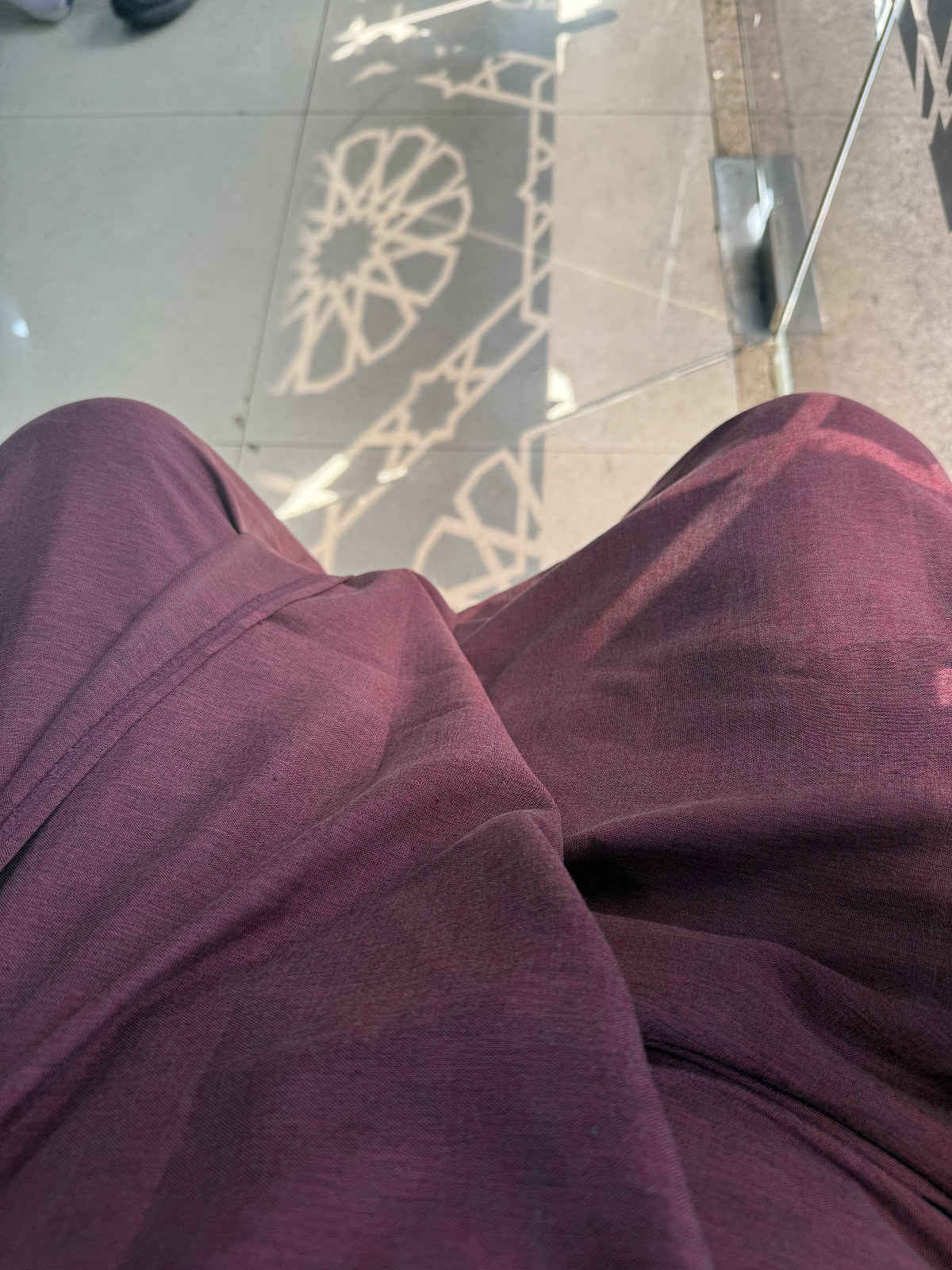
After regaining my energy with coffee, I headed to the Istiqlal Mosque, Jakarta's representative religious monument. Because I arrived on foot, I had to walk almost all the way around the massive mosque's outer wall before I finally found the information entrance. As I entered the information center, the staff welcomed me warmly and lent me a long purple robe for free to cover my exposed shorts. Furthermore, a dedicated guide was assigned to kindly guide me through the interior of the mosque, allowing me to feel a warm inclusivity amidst the religious solemnity.
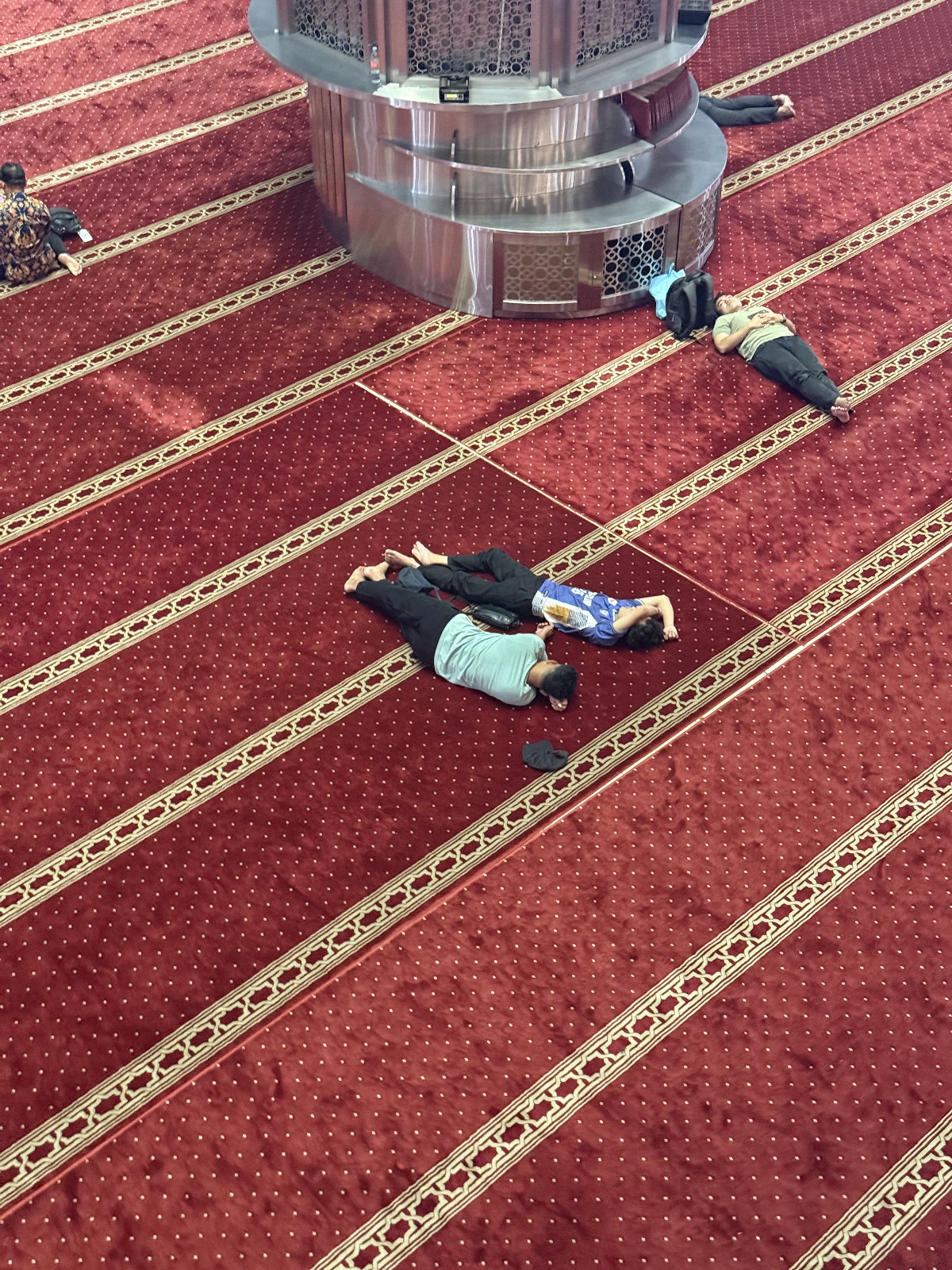
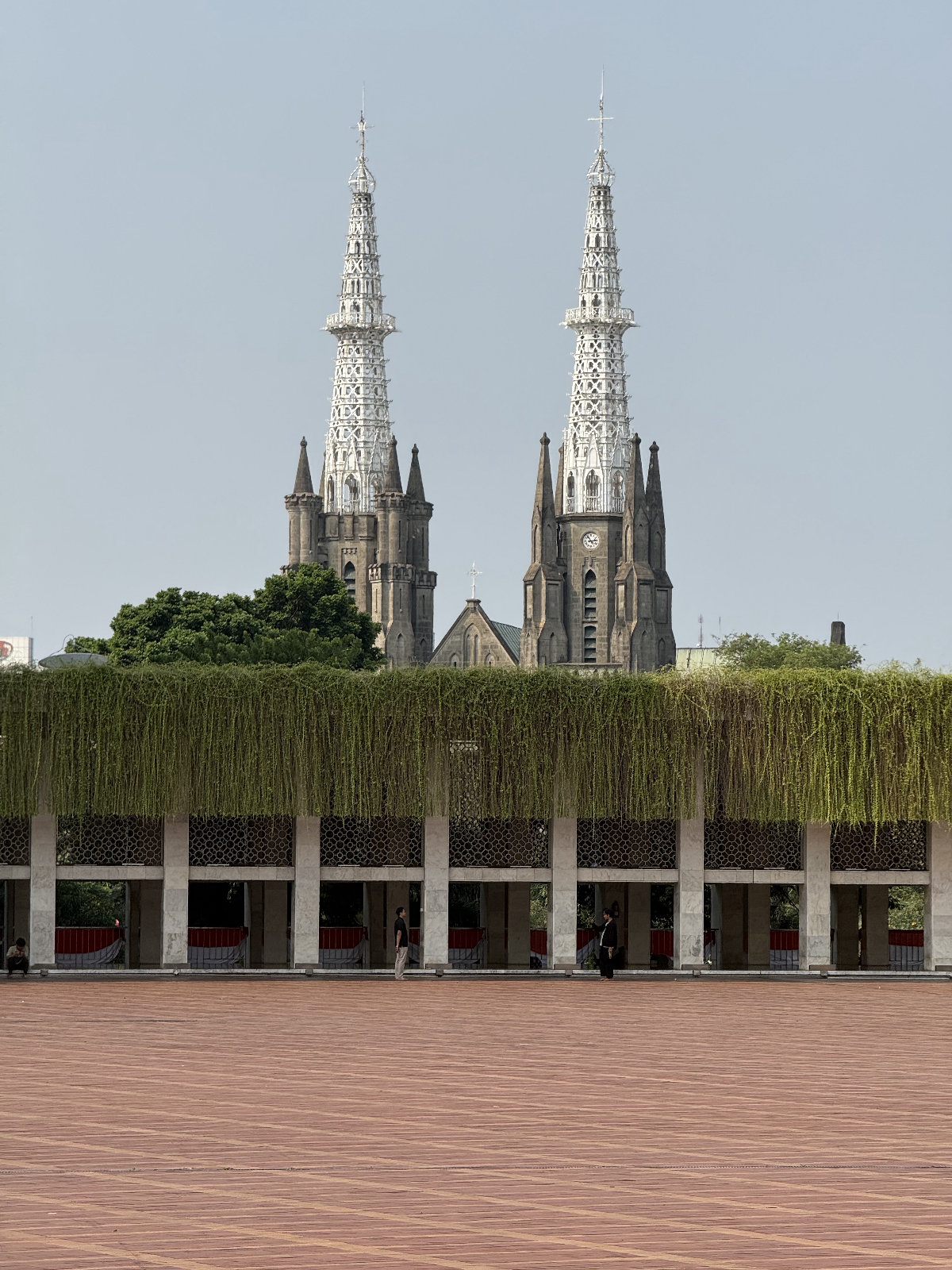
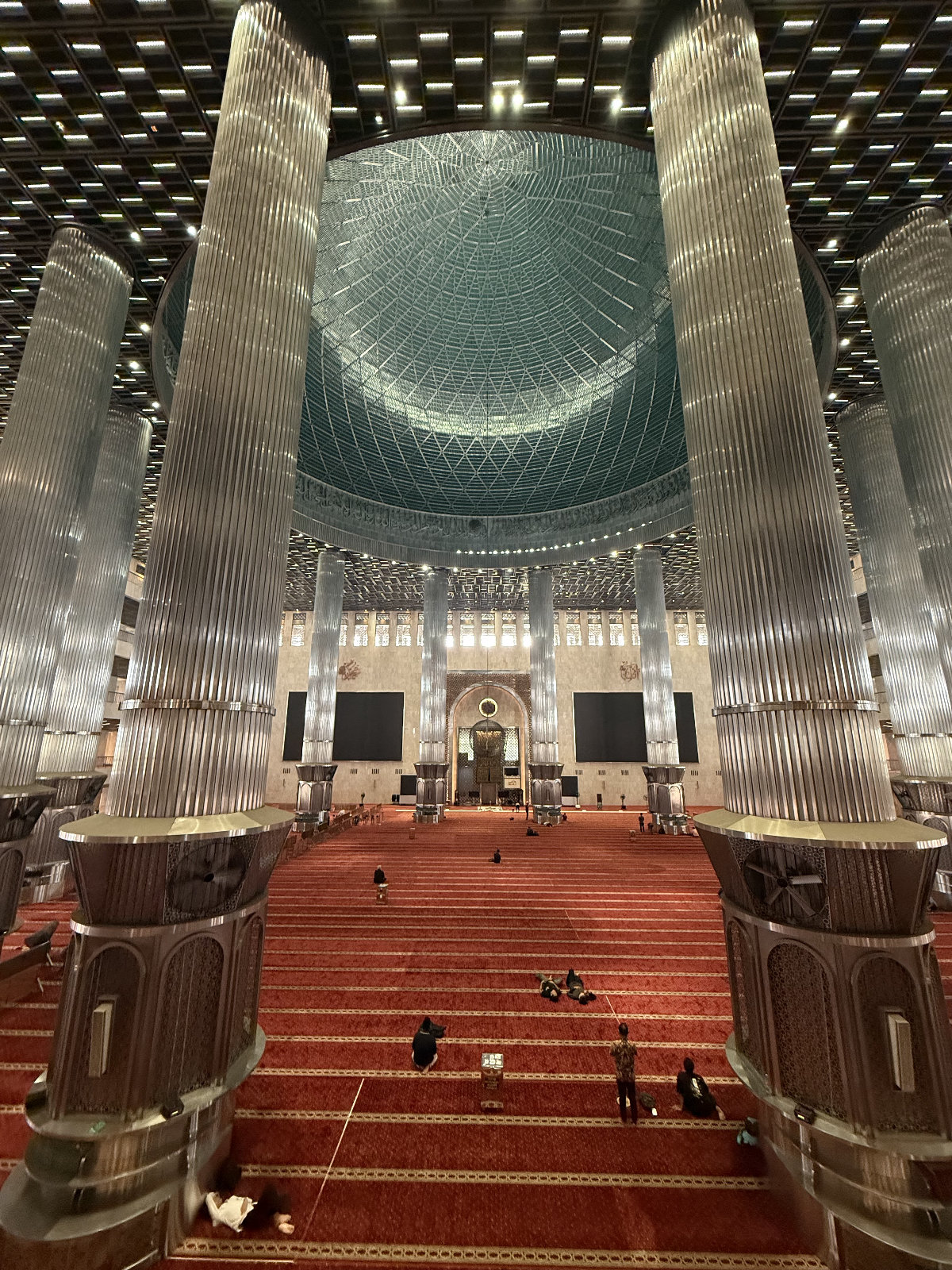
Boasting the largest scale in Southeast Asia, the main prayer hall inside the Istiqlal Mosque was literally grand enough to make my mouth hang open. The guide explained that the 12 stainless steel pillars supporting the massive central dome represent the birthday of the Prophet Muhammad, while the dome's diameter of 45 meters symbolizes 1945, the year Indonesia declared independence. Historical and religious meanings were elaborately engraved into every single structure of the building. Across the vast red carpeted floor, many people were lying down horizontally. I asked the guide, "Are those people prostrating in prayer right now?" to which the guide replied with a smile. "No, they are just sleeping leisurely on the cool floor of the mosque." That answer made my heart feel much warmer and more comfortable. It was very sweet to see that the mosque was not confined only to religious solemnity but also served as an everyday resting place for residents. Going up to the second-floor corridor, the two pointed spires of the Jakarta Cathedral, located across the street, came into view all at once beyond the wall. The landscape of an Islamic mosque and a Catholic cathedral facing each other across a single main road and coexisting amicably felt like a symbol of religious harmony.
On the Way Back, Cutting Through the Wind
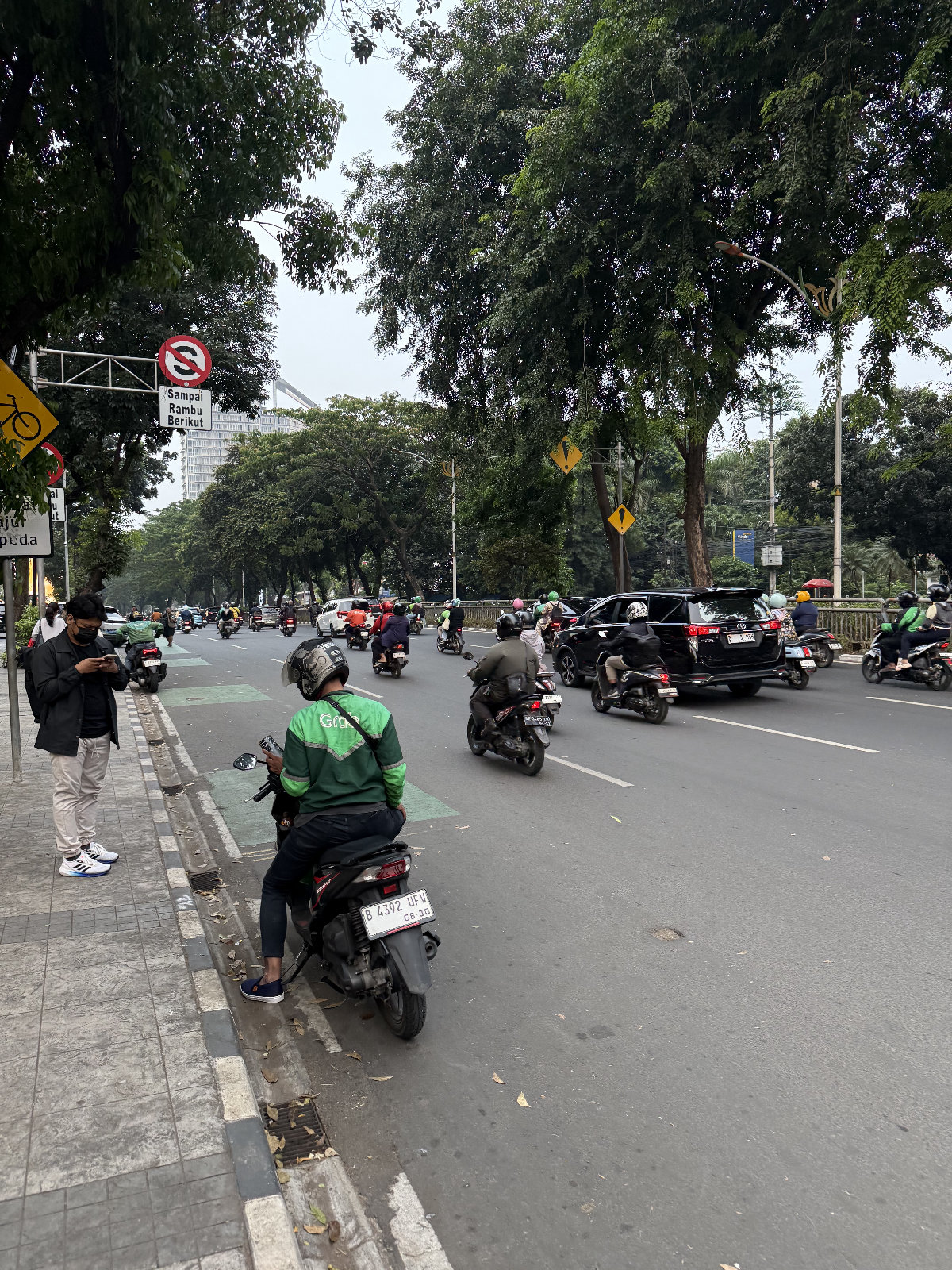
By the time I finished the mosque tour and came out, it was past 5:00 PM. My legs, which had been walking through downtown Jakarta all day long covering over ten thousand steps, felt heavy. To return to the hotel, I called a Grab Bike, the most common means of transportation for locals. Climbing onto the back seat of a driver wearing a green vest, I adjusted my helmet. The cool evening breeze hit my face, cleanly washing away the sweat beads that had formed during the day. Running mixed in with a procession of hundreds of motorcycles filling the road offered a different kind of vitality than when I was walking. Arriving back at the hotel around 6:00 PM, I wrapped up my first day's journey in Jakarta. Although it was a hard day of breathless walking, from the garbage dumps in the alleys to the grandeur of Monas and the peace of the mosque, the depths of my heart were filled with warm memories. The first impression of Jakarta that I felt was 'the innocence and smiles of the people.' Out of the numerous Grab drivers and street vendors I met on the road, not a single person aggressively solicited me or acted unpleasantly. Innocent people who made eye contact without hesitation and smiled brightly at a foreign stranger. A city that is rough and noisy on the surface, but underneath flows a strange warmth that consistently and comfortably embraces travelers—that was the real face of Jakarta that I got to know by stepping on it with my own two feet.